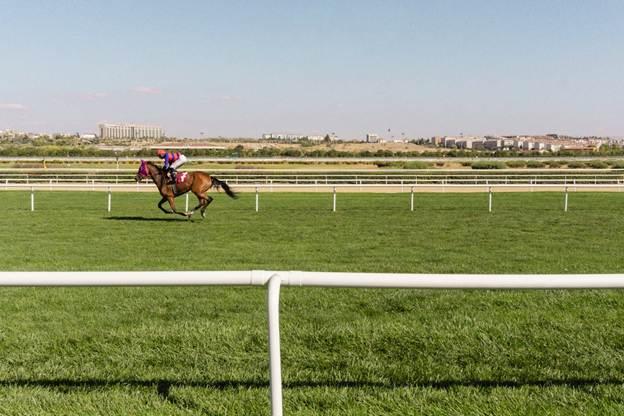
Most of us look at champion racehorses, and the first thought that comes to mind is speed. That makes sense. They’re built to be fast and powerful.
But if you look beyond the race itself, there’s actually a lot more going on. Champion racehorses aren’t just born, pointed at the track, and told, “Okay, good luck…try to run as fast as possible.”
There are training, routine, recovery, nutrition, timing, trust, and patience. Basically, an entire system. This means that they earn their speed and success. Funny enough, we can learn a lot from champion racehorses. Most of their progress can be translated to regular human life, and yet we don’t see it.
This doesn’t mean that you should start eating oats and hay and do speed runs at 5 in the morning. But some real lessons champion racehorses can teach us.
1. Talent Helps, But Systems Win
There is no doubt that some horses are naturally gifted. Some have better genetics, stronger builds, and better stride efficiency. But raw talent alone isn’t enough. Just because these horses are slightly better than others, it doesn’t mean that they will become champions and win big races like the Preakness Stakes.
After all, there is a reason why professional handicappers research the horse training regime, form, and past results before placing a bet. People don’t just bet on the Preakness Stakes because a horse is talented.
They place a bet because the horse has potential based on real-world numbers. That’s why they research all the latest news, notes, and odds for the Preakness Stakes 2026 before placing a bet.
This means that a great horse still needs a structure. We’re talking about the right training plan, the right trainer and jockey, a good recovery schedule, and the right race selection.
It seems like this is a lesson that we can apply in everyday life. Most of us devalue ourselves, saying that we’re not talented or “gifted.” But most people don’t realize that talent alone isn’t enough to be successful. It’s like Mat Armstrong’s quote, “Hard work beats talent,” and horses are the perfect example.
2. You Don’t Need to Go Full Speed Every Day
This might be the biggest lesson that humans can learn from champion racehorses. Most of us work with big fluctuations. We either sit at home, do nothing, or go to the gym every day. Then we start noticing burnout symptoms and quit the gym for at least 4-5 months, then try again.
But if we look at champion racehorses, they do things differently. There is a strict schedule for workouts, both easy and hard ones, but also rest days. There is a system. This allows them to stay in shape, reach peak performance, and avoid injuries.
Pushing hard every day doesn’t build champions. The only result will be fatigue, injuries, and a very unhappy horse.
So, find the time to pause, take a deep breath, restructure your brain, and then move on.
3. Recovery Is Part of the Work
Most people treat rest like something separate from progress.
You work hard, and then if there’s time left over, maybe you rest. Maybe. Unless your phone exists, in which case you “rest” by staring into a glowing rectangle until your brain turns into soup.
Racehorse trainers don’t think that way.
Recovery is built into the program because performance depends on it. After hard workouts, horses are cooled down, monitored, fed properly, and given time to reset. Nobody serious says, “Let’s skip recovery and hope vibes carry us through.”
4. Timing Can Matter More Than Effort
In racing, effort alone doesn’t win.
A horse can be strong, fast, and well-trained, but if it makes the move too early, it may fade before the finish. If it waits too long, the opportunity disappears. The best performances come from using energy at the right moment.
Life works like that more often than we admit. There are times to push. Times to wait. Times to conserve energy. Times to make the move.
The problem is that most people only focus on effort. Work harder. Try harder. Do more.
But sometimes the issue isn’t effort. It’s timing.
5. The Right Partner Changes Everything
A champion racehorse doesn’t win alone. The jockey matters. A lot.
The best jockeys understand when to hold back, when to push, how to position the horse, and how to stay calm under pressure. They don’t fight the horse. They work with it.
That partnership is everything. And honestly, this applies almost everywhere.
The right coach, mentor, partner, friend, employee, collaborator, or teammate can change the outcome completely. Not because they do everything for you, but because they help you perform better than you would alone.
The wrong partner does the opposite.
They pull at the wrong time, panic under pressure, misunderstand the situation, and somehow make every problem heavier.
Champion racehorses teach us that talent needs the right people around it.
6. Small Signals Matter
Good trainers notice small things.
A horse is eating differently. Moving slightly off. Recovering slower than usual. Acting nervous. Looking dull. Showing less energy.
To most people, these details mean nothing. To a trainer, they can mean everything.
That’s because small signals often show up before big problems. Ignore them long enough, and suddenly you’re not dealing with a small adjustment anymore. You’re dealing with an injury, a missed race, or a full reset.
Humans are terrible at this.
We ignore the signs all the time. Bad sleep. Constant stress. Low motivation. Irritability. Tightness in the body. That “something feels off” feeling we pretend is just Monday.
7. You Need Your Own Track
Not every horse is built for the same race.
Some perform better on dirt. Others prefer turf. Some are sprinters. Others need distance. Some do better in certain conditions, with certain pacing, or under certain types of rides.
The best trainers don’t force every horse into the same mold. They figure out where that horse performs best.
This might be the most useful lesson of all.
People love comparing themselves to others, but half the time, they’re comparing different “tracks.” Someone else may thrive in a fast-paced corporate environment. You might do better building something independently. Someone else may love public attention. You might do your best work quietly.
So, did you learn something from champion racehorses? These are incredible animals, and they work so hard to achieve success in the horse racing industry. We should implement some of these lessons in our daily lives and notice how things start to shift immediately.