
Electronic humidors have made it dramatically easier to keep cigars in the sweet spot—steady humidity, stable temperature, minimal babysitting. But “easier” doesn’t mean “automatic.” If you’ve ever opened a unit to find crunchy wrappers, swollen foots, or a musty smell creeping in, you already know the hard truth: small setup mistakes can undo the whole point of an electronic system.
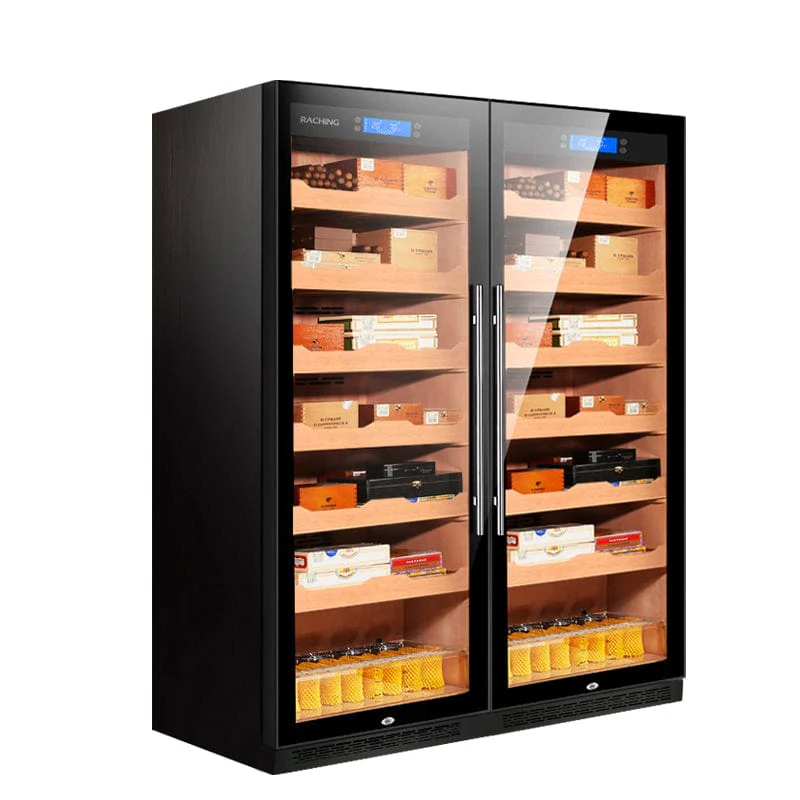
Whether you’re moving up from a desktop humidor or managing a growing stash, these practical habits will help you get the best results from electric cigar humidors cabinets like Raching-style units—especially when capacity, airflow, and consistency start to matter more than aesthetics.
Start With the Right Expectations (and the Right Capacity)
Before you touch a settings button, get clear on what you’re trying to achieve. An electronic humidor isn’t just a box that “adds humidity.” It’s a controlled micro-environment, and the more cigars you store, the more that environment is influenced by:
- how often you open the door
- how densely you pack shelves and drawers
- the moisture content of the cigars you add (fresh shipments can swing RH)
That’s why capacity planning is not a trivial detail. If your collection is already pushing the limits, stability becomes harder: airflow channels get blocked, sensors read “average” conditions that don’t reflect the tight corners, and recovery time after opening the door increases.
Collectors who are scaling up often look specifically for high-capacity storage for large cigar collections because the practical gains aren’t just about fitting more boxes—they’re about maintaining a more even climate across shelves when a cabinet is designed for volume and circulation.
Set Your Targets Like a Pro (Not Like a Forum Myth)
Humidity: Don’t Default to 70% Unless You Know Why
A common beginner move is to set the humidor to 70% RH and walk away. In reality, ideal humidity depends on your preferences and the cigars you smoke.
Most experienced collectors land somewhere around 65–69% RH, because it reduces burn issues and helps avoid swelling, especially in tightly rolled cigars. If you live in a very humid climate or your unit sits in a warm room, leaning toward 65–67% can be safer.
Temperature: Stability Beats “Cold”
Aim for 65–70°F (18–21°C). Temperature swings matter more than the exact number. Every time temperature rises, relative humidity behaves differently, and your cigars expand and contract more than you think. If your electronic humidor has temperature control, use it to smooth peaks and valleys, not to chase a perfect reading.
Don’t Skip the “Seasoning” Step—Even With Electronic Units
Wood Still Needs to Find Equilibrium
Some electronic cabinets include Spanish cedar interiors or drawers. Cedar moderates humidity and adds that classic aroma, but it also absorbs moisture at first. If you load cigars immediately and rely on the device to compensate, the unit may “look stable” on the display while your cigars quietly dry out as the cedar steals moisture.
Seasoning doesn’t need to be complicated:
- Run the unit empty at your target RH for several days.
- Add a few inexpensive cigars or dry boxes as “buffers” before loading prized inventory.
- Watch how quickly the unit recovers after opening the door—this tells you a lot about readiness.
If the cabinet struggles to regain setpoint, you’re not ready to pack it full.
Calibrate, Verify, Then Trust (In That Order)
The Built-In Sensor Isn’t the Whole Story
Factory sensors vary. Even good ones can drift over time, especially in environments with frequent door openings or heavy moisture cycling.
Use a separate, reputable hygrometer (or two) to verify conditions. Place one near the top and one near the bottom for a week. You’re looking for consistency, not just a nice number on the screen.
If you discover a gap—say the cabinet reads 68% but your independent gauge reads 64%—adjust the calibration (if your model allows) or set your target accordingly. The goal is to know what your cigars are actually experiencing.
Load It Smart: Airflow Is a Storage Strategy
Avoid “Perfect Tetris”
The biggest performance killer in a large electronic humidor is overpacking. Shelves flush with boxes leave dead zones where humidity and temperature lag behind.
Give the air somewhere to move:
- Leave small gaps between rows of boxes.
- Don’t block vents or fans with bundles or accessories.
- Rotate stock occasionally if you keep long-term inventory (bottom-to-top swap every month or two).
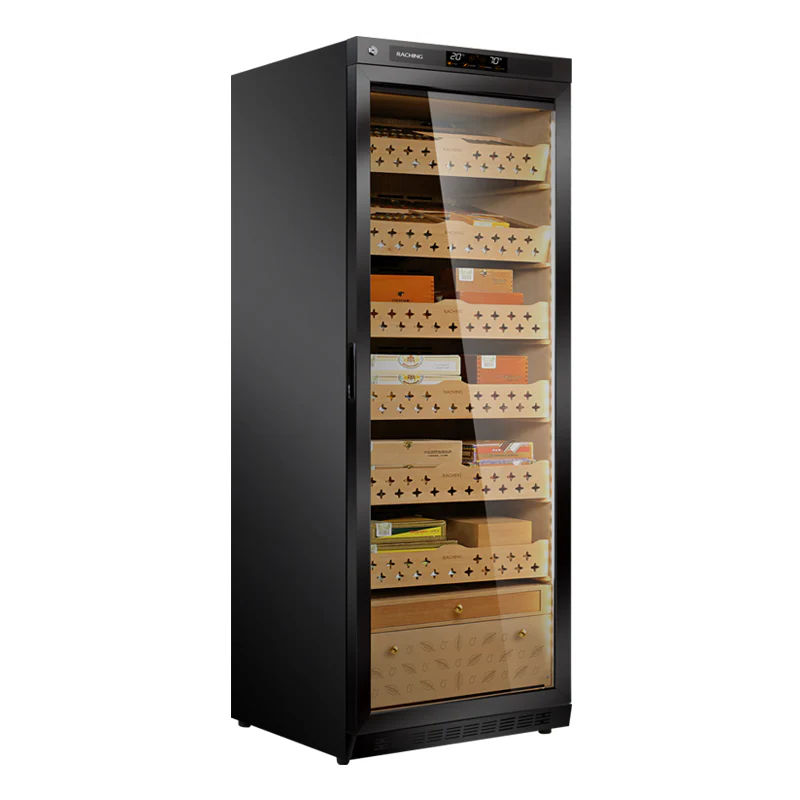
If your unit has drawers, avoid cramming them so tightly that the cedar can’t “breathe.” Cigars benefit from gentle circulation, not stagnation.
Water and Maintenance: The Unsexy Part That Saves Your Collection
Use the Right Water
If your electronic humidor uses a reservoir or humidification cartridge, stick with distilled water unless the manufacturer specifies otherwise. Tap water can introduce minerals and microorganisms. Over time, that’s how you get funky smells, clogged components, and erratic humidification.
Clean on a Schedule (Not When Something Smells Off)
A light maintenance routine prevents most issues:
- Wipe interior surfaces occasionally with a barely damp cloth (distilled water).
- Check reservoirs, wicks, or pads for buildup.
- Replace consumable elements on schedule.
- Keep the door seals clean—poor seals create constant “hunting” behavior as the unit tries to correct for leaks.
One more practical habit: keep the humidor out of direct sunlight and away from HVAC vents. Even the best cabinet struggles if the room is forcing rapid temperature changes.
Troubleshooting: What the Symptoms Usually Mean
“My RH Swings a Lot”
Some swing is normal, especially after door openings. But large, frequent swings typically point to:
- a leaky door seal
- an overfilled cabinet restricting circulation
- a reservoir/wick issue (not wicking efficiently)
- a sensor placed in a spot that doesn’t reflect average conditions
“I’m Seeing White Stuff—Mold or Plume?”
It depends on texture and pattern. Plume (crystallized oils) tends to look even and dust-like. Mold is often fuzzy, webby, or spotty and can appear in irregular patches. When in doubt, isolate the cigars and inspect closely—your nose is useful here too. Musty, damp-basement aromas are a red flag.
Final Thought: Treat It Like a Small Cellar
An electronic humidor is closer to a wine fridge than a desk box. The payoff is real—consistent smokes, better aging, fewer surprises. But the best results come when you think like a caretaker of a small cellar: control the environment, verify the instruments, and load the space in a way that supports airflow and stability.
Do that, and even a large cabinet setup becomes refreshingly boring—in the best way possible. Your cigars rest, mature, and smoke the way they were meant to, and you spend less time chasing numbers on a display.