
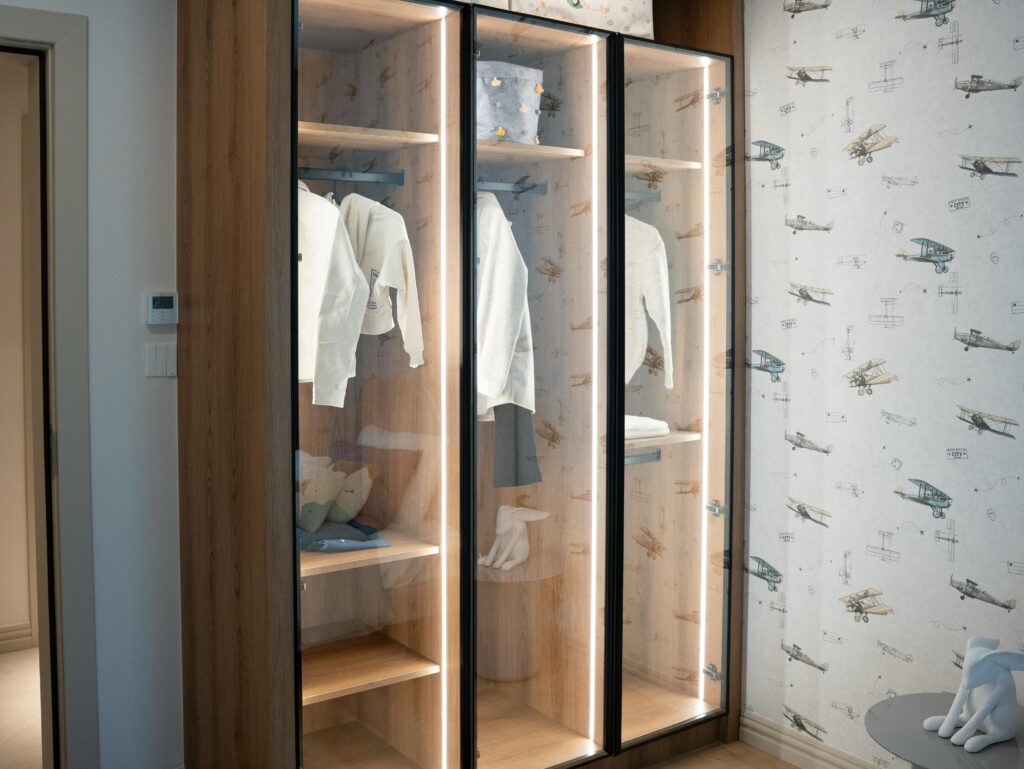
The jumble in your closet isn’t simply about clothes; it’s about the mental burden of decisions you haven’t made yet. We’ve all stood before a full wardrobe feeling as if we have nothing to wear. It’s because the space has turned into a cemetery for “someday” clothes rather than an actual tool you use as part of your lifestyle. Americans spend about $500 billion a year on apparel, but research suggests most people wear only 20 percent of what they own.
That’s a lot of wasted real estate in your bedroom—and in many ways, it mirrors how people approach long-term planning, from retirement savings options to everyday financial decisions they keep postponing. Taming this chaos doesn’t mean doing a weekend-long organizational overhaul that has you running on fumes. You can take back control (without the burnout) by breaking down the process shelf by shelf. It’s time for you to put the battle with your furniture to rest and build a collection that serves your routine.
Conquer Closet Clutter
The most common philosophy is to tackle decluttering as a monumental event, but the true path to success is using micro-wins instead. Start with a single shelf. Strip it off entirely until you see bare wood or wire. This physical resetting is important because it requires you to confront every last thing you’ve pushed to the back.
The National Association of Productivity & Organizing Professionals found that we can waste up to a year of our lives searching for misplaced things. In a closet, this time is squandered rifling through dissimilar socks or pilled sweaters. (If you finish a project in one area of your home before moving on to another space, you avoid the “halfway through” panic that happens when half your room is covered with flotsam and jetsam fabric items from different projects.)
Sort High-Value Items
Create a training ground for things that still have a pulse. The average consumer in the US disposes of 81 pounds of clothing each year. A lot of this goes to the landfills, but your trash could be another person’s treasure.
Donating or selling pieces that are in good shape is a no-brainer. Local consignment shops or websites such as Poshmark work well for recouping part of your initial investment. For everything else, respectable charities are always in need of clean, wearable basics. This lays the physical groundwork for a more orderly home.
Categorize Every Garment
And once the excess is eliminated, the things that remain need a rational space. The best way of seeing exactly what you have is to group by category. You quit buying so much stuff when your denim’s on one side and your gym gear’s on another.” It’s a cinch to pull out a third pair of black leggings when the first two are entombed under cardigans. In reality, leading organizations agree that visibility is what keeps order. “If you can’t see it, you’re not going to wear it.
When the weather shifts, “shopping” your own storage is a renewal. It’s a good time to review those items again. If you didn’t wear a single sweater all winter long, it’s likely an ideal candidate for the donation bin. That rotation stops packing as tightly in a way that causes clothes to wrinkle and disappear.
Optimize Vertical Space
Most standard closets tend to have a lot of “dead” air. Most builders put in a single rod and one shelf, wasting feet of space above and below. To truly bring order to the chaos, you have to think vertically. Storing all the way to the ceiling boosts your storage space by almost 40%. And that’s where the shelf-by-shelf approach really excels. Rather than one big, black hole of a pile, think multiple shallow levels where things remain in view and within reach.
Maximize Top Reach
The highest shelf is often a graveyard for things people don’t know what to do with, all over again. Change that. Use decorative lidded containers for long-term storage or large items such as extra bedding and holiday sweaters.
As you aren’t actually grabbing these daily, the height isn’t an issue. And because these are clear containers, or you can just put a simple tag on the front, you won’t need to pull every single box down just to find one item. It’s about working with the architecture of the closet to create something that you need, as opposed to pushing against what’s already there:
- Uniform lidded bins: Keep items contained and visually consistent
- Clear containers or labels: Quickly identify contents without unpacking
- Seasonal grouping: Store winter and holiday items together for easier rotation
- Frequency-based placement: Keep rarely used items on the highest shelves
- Lightweight packing strategy: Avoid overloading boxes for safer access
- Category organization: Separate bedding, clothing, and miscellaneous items into distinct bins
Maintain Storage Systems
The most difficult thing isn’t the first cleanout; it’s maintaining it. Without some kind of maintenance plan, closets tend to revert to their natural state of chaos within weeks. For a reason, there’s a “one in, one out” rule that is popular logic around here in the US. If you buy something new, something else has to go. This stabilizes your inventory and prevents the slow creep of clutter. Consider your wardrobe a living organism that needs constant pruning to thrive.
The rest of the week, spend five minutes each Sunday evening returning things to their rightful places. During the week, we get lazy. Shoes fall to the floor, and sweaters are draped over the rod. A sharp reset stops the mess from reaching that tipping point where it suddenly feels overwhelming again.