
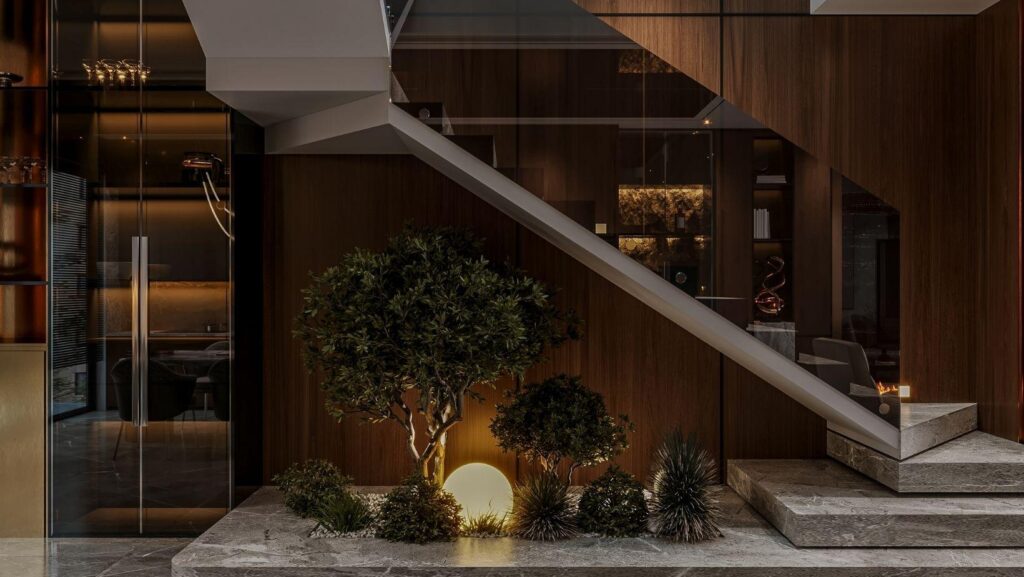
There’s a funny thing that happens in older houses. The staircase is there, obviously, but it almost disappears. You pass it on the way to the kitchen. You drop a bag near it. You tell someone, “Shoes go by the stairs,” and that’s about as much attention as it gets.
Modern homes treat stairs very differently.
Now the staircase is often right in the middle of the visual story. You see it from the entry. You see it from the living room. Sometimes you see it from the kitchen, framed by light, floors, walls, and furniture all at once. That changes the stakes. A heavy railing can make the whole space feel older. A cleaner one can make the home feel sharper before anything else changes.
That is why glass railings now belong in conversations about layout, lighting, and interior flow. The staircase is no longer just the thing that gets you upstairs. It is part of how the home introduces itself.
Why Staircases Became More Visually Important
Stairs used to have a smaller job.
They connected floors. That was enough.
Now they do more because homes are more open. Fewer walls means fewer places to hide awkward details. A staircase that once would have sat behind a hallway now stands in full view, sometimes directly across from the front door.
And people notice.
Maybe they do not say, “That railing has too much visual weight.” Normal people do not talk like that. They say the entry feels dark. Or the room feels chopped up. Or the house somehow looks dated, even though the floors and furniture are new.
That “somehow” is often the staircase.
Modern staircase trends are not only about dramatic floating steps or magazine-cover architecture. Sometimes the shift is quieter. Better lines. Less bulk. Materials that let the room breathe. A staircase that feels like it belongs to the whole interior, not like it was left behind from an older renovation.
Open Interiors Changed Staircase Design
Open interiors changed the rules.
When the kitchen, living room, entry, and upper landing all speak to each other, the staircase becomes part of that conversation. It cannot sit there looking heavy and unrelated. It has to help the space flow.
This is where railing choices matter.
A bulky railing can stop the eye. The room might be spacious, but it feels interrupted. The staircase becomes a wall pretending to be a design feature.
A lighter railing does something different. It keeps the stairs visible without making them dominate. Light moves through. The upper floor feels connected to the lower one. The home feels more open without losing structure.
That is the real appeal.
Not drama.
Ease.
A staircase should move people through the house, but it should also let the house feel connected while they are standing still.
Heavy Railings Make Spaces Feel Smaller
Some railings make a room feel like it is wearing a heavy coat indoors.
Dark wood. Thick posts. Busy metalwork. Clunky framing. These details can be beautiful in the right house, but in a clean modern interior, they often feel too loud.
The room may have high ceilings and good light, yet the staircase still makes everything feel tighter.
That is because sightlines matter. If your eye keeps hitting the railing, the space feels broken into pieces. The entry feels smaller. The hallway feels narrower. The living room feels less connected.
Lighter materials change that quickly.
Glass, slim metal, cleaner profiles, and simpler shapes let the staircase keep its presence without swallowing the room. The structure is still there. It just stops arguing with everything else.
That is one of the most useful staircase design ideas for modern homes: remove what makes the space feel heavier than it needs to.
Sometimes the best design move is not adding more.
It is taking away the thing that keeps interrupting the room.
Modern Homes Prioritize Visibility and Flow
A modern home is often judged by how easily the eye moves through it.
That sounds subtle, but you feel it immediately.
You walk in and either the space opens up, or it stops short. You either see light moving across rooms, or you see a series of visual blocks. You either feel the home pulling you forward, or you feel it closing in.
Staircases play a huge role in that.
A staircase near the entry can make the first floor feel tall and connected. A staircase with open sightlines can help daylight travel farther. A cleaner railing can make the upper level feel less separate from the rest of the home.
The World Green Building Council has discussed how daylight can support comfort and wellbeing indoors, which fits with why homeowners keep chasing brighter, more open interiors.
People want homes that feel lighter.
The staircase can either help with that or quietly ruin it.
Architectural Details Now Carry More Weight
Simple interiors are not easier to design.
They are less forgiving.
When there are fewer decorative layers, the architectural details matter more. The stair railing. The trim. The ceiling lines. The floors. The way one material meets another. Everything is more exposed.
That is why staircases now carry more design weight.
In a heavily decorated home, a dated staircase might blend into the background. In a modern minimalist space, it becomes impossible to ignore. The whole room can be calm and beautiful, but one clunky railing can pull the mood backward.
Luxury homes understand this. They do not always need a dramatic staircase. They need one that feels deliberate.
- A lighter material.
- A better relationship with the light.
- A staircase that looks like it was considered, not simply installed.
The National Association of Realtors has reported that remodeling projects can increase homeowners’ enjoyment of their spaces, which makes sense here. Some upgrades matter because they change the way a home feels every single day: NAR Remodeling Impact.
A staircase is not something you see once.
You live around it.
Final Thoughts
Modern staircases are becoming design features because homes have changed around them.
Open layouts, cleaner interiors, and brighter spaces have made stairs more visible than ever. That visibility gives them a bigger job. They need to connect levels, carry light, support the style of the home, and avoid making the room feel smaller.
A good staircase still works quietly.
But it no longer disappears.
In modern interiors, the staircase helps decide whether the home feels heavy or open, dated or current, ordinary or fully considered.