
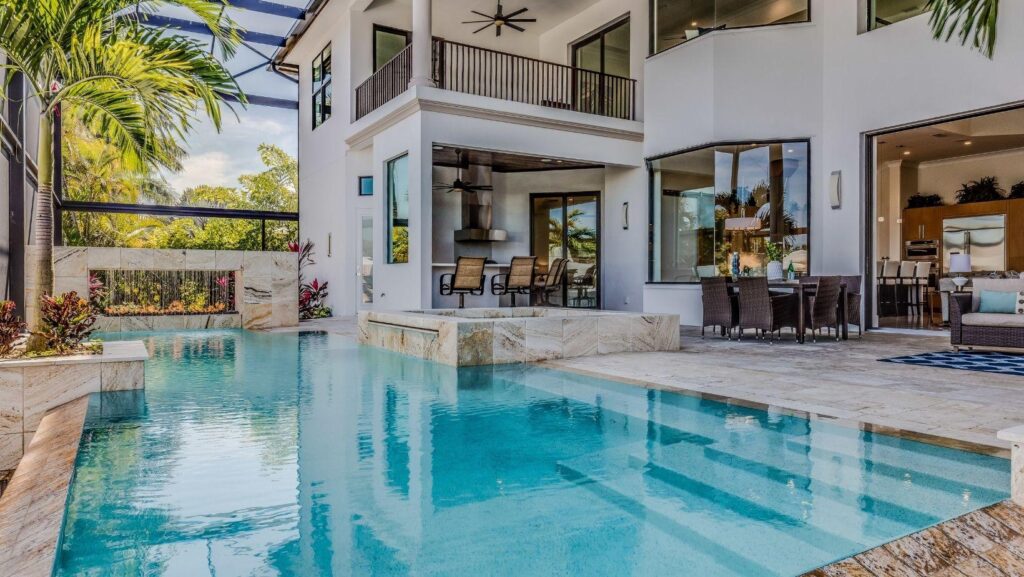
Luxury backyards are getting quieter.
Not less beautiful. Just less crowded.
The newer look is cleaner: open views, low visual noise, soft landscaping, calm pool areas, and safety features that do not steal attention from the architecture. Homeowners still want protection around the pool, of course. They just no longer want the entire backyard interrupted by bulky fencing. That is why frameless glass pool fences are showing up in more high-end outdoor spaces. They create a barrier without making the yard feel boxed in.
Why Visibility Became Part of Luxury Design
Luxury pool design has changed.
It is less about showing off every feature and more about letting the whole outdoor space breathe. The pool, patio, landscaping, furniture, and architecture are expected to work together visually.
A heavy fence can break that effect fast.
When sightlines stay open, the backyard feels larger. The pool becomes part of the full landscape instead of a separate zone. The view from the kitchen, patio, or outdoor lounge stays clean.
That matters because outdoor spaces are increasingly treated as true living areas. The National Association of Realtors’ outdoor remodeling report looks at why homeowners invest in outdoor features and how those projects can affect enjoyment and perceived value at home.
In a luxury yard, visibility is not a small detail.
It is part of the design.
Traditional Fencing Often Interrupts Outdoor Flow
Traditional pool fencing can feel heavy.
Wood, metal, and thick framed barriers may serve a purpose, but they often divide the backyard into pieces. The pool sits there. The patio sits somewhere else. The garden gets visually cut off. The whole space starts feeling smaller than it is.
That is the problem modern homeowners are trying to avoid.
They want safety, but they also want flow.
Bulky fencing can make even a well-designed backyard feel segmented. It can block landscaping, interrupt clean architectural lines, and make the pool area feel more like a restricted zone than a natural part of the home.
You notice it most from inside the house.
A beautiful backyard view suddenly has a visual stop in the middle of it.
That is exactly what frameless outdoor design tries to solve.
Modern Outdoor Spaces Prioritize Visual Continuity
The best outdoor spaces feel connected.
Pool to patio. Patio to garden. Garden to house. Nothing feels chopped up. Nothing feels added as an afterthought.
Visual continuity creates calm because the eye does not keep hitting barriers. It moves naturally through the space, which makes the yard feel more open and considered.
This is especially important in homes where the backyard is visible from major interior rooms. Sliding doors, large windows, open kitchens, and indoor-outdoor living areas all make exterior design part of the daily view.
Continuing demand for more naturalistic, less rigid landscapes, which fits the broader move toward softer and more integrated outdoor design.
A modern backyard does not need to be crowded with features.
It needs to feel whole.
Minimalist Design Trends Reached the Backyard
Minimalism moved outdoors.
Not the cold, empty version. The better version.
Cleaner lines. Fewer distractions. Stronger materials. Better spacing. More attention to how each element affects the atmosphere.
In that kind of backyard, every visible feature matters. If a fence is bulky, it changes the entire tone. If a barrier disappears visually, the pool area instantly feels more refined.
That is why minimalist pool spaces often feel more expensive than heavily decorated ones. They do not try so hard.
They let water, light, landscaping, and architecture do the work.
Outdoor trends are also leaning toward functional spaces that still feel cohesive and comfortable. Recent backyard design coverage has pointed to outdoor “living rooms,” wellness-focused spaces, and simpler, more purposeful layouts as key directions for 2026.
The lesson is clear: luxury is becoming less cluttered.
Outside too.
Safety Features Now Need to Match Architecture
Safety is still non-negotiable.
A pool area needs proper protection, especially in homes with children, guests, or frequent entertaining. The difference now is that homeowners expect safety features to respect the design of the property.
That expectation is fair.
A luxury home should not have a backyard that feels visually interrupted by one necessary feature. Modern backyard safety is moving toward materials and layouts that blend into the surroundings instead of dominating them.
The U.S. Consumer Product Safety Commission’s Pool Safely program says pool barriers are a key layer of protection and should prevent children from getting over, under, or through them when unsupervised.
That guidance matters.
The design challenge is making safety feel integrated, not imposed.
Glass barriers answer that problem well because they protect the pool area while keeping the yard visually open. The result feels cleaner, calmer, and more aligned with modern architecture.
Final Thoughts
Modern luxury design values openness.
That is the real shift.
Outdoor spaces are no longer judged only by how many features they have. They are judged by how well everything works together: the pool, the patio, the landscaping, the view, the light, and the way people move through the space.
Invisible pool barriers fit that direction because they provide safety without visual heaviness.
Clean sightlines make a backyard feel larger.
Minimal barriers make the design feel calmer.
And in luxury outdoor spaces, that kind of visual quiet often feels more expensive than anything loud.