
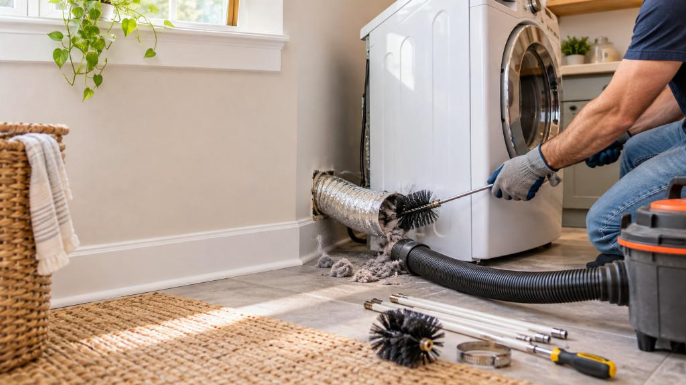
The first time I pulled my dryer away from the wall, I found a mat of lint almost as thick as a bath towel. I had cleaned the lint screen after every load for years, assuming that was enough. It wasn’t.
The lint screen catches a lot of debris, but some lint still makes its way into the exhaust duct. Over time, that buildup can restrict airflow, make the dryer run longer, and increase heat inside the system.
If your clothes take longer to dry, the laundry room feels unusually hot, or you notice a burning smell, your dryer vent may need cleaning.
For a short, accessible vent, the job usually takes about 30 minutes with a dryer vent brush kit, vacuum, and a few basic tools.
Key takeaways
- Cleaning the lint screen does not clean the exhaust duct.
- Long drying times, excessive heat, a burning smell, or weak airflow can indicate a clogged vent.
- A dryer vent brush kit and vacuum can handle many short, accessible duct runs.
- Annual cleaning is a reasonable starting point, although heavy use, pets, and long duct runs may require more frequent cleaning.
- Rigid or semi-rigid metal duct is preferable to vinyl or foil accordion-style duct.
- If the dryer still doesn’t heat properly after cleaning, the appliance may have a failed component.
Signs your dryer vent needs cleaning
Dryer vent problems usually develop gradually. Watch for:
- Clothes remaining damp after a full cycle
- A dryer or clothes that feel unusually hot
- A laundry room that becomes hotter or more humid than usual
- A burning or scorched smell
- Lint around the exterior vent
- An outside vent flap that barely opens
- The dryer shutting off before the cycle ends
One symptom doesn’t necessarily mean the vent is clogged, but several occurring together are a good reason to inspect the exhaust system.
What you’ll need
For a basic cleaning, gather:
- Dryer vent brush kit with flexible rods
- Vacuum with hose attachment
- Screwdriver or nut driver
- Foil tape or appropriate clamps
- Work gloves
- Dust mask
- Flashlight
Before starting, make sure you can move the dryer safely. With a gas dryer, take extra care around the gas connection and shut off the gas supply before working behind the appliance.
How to clean a dryer vent
1. Unplug the dryer
Disconnect the dryer from the electrical outlet. If it’s a gas model, close the gas shutoff valve.
2. Pull the dryer away from the wall
Move it slowly and only as far as necessary to access the exhaust connection. Don’t crush or sharply bend the duct or put unnecessary stress on a gas line.
3. Disconnect the exhaust duct
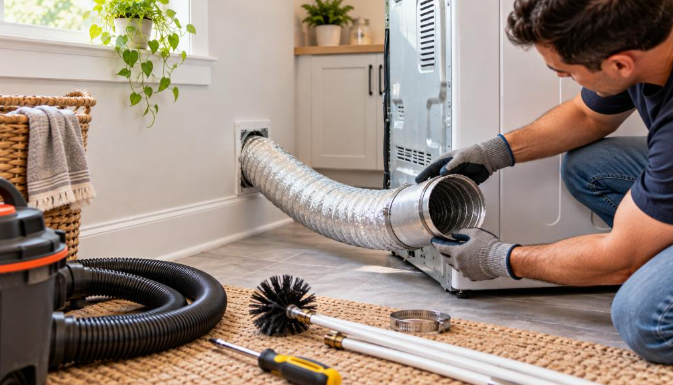
Loosen the clamp and disconnect the duct from the back of the dryer and, if accessible, the wall connection. Keep the vacuum nearby because loose lint can fall out.
4. Vacuum the accessible areas
Vacuum the dryer’s exhaust opening and any accessible section of duct. I prefer doing this before brushing because it removes loose lint before the brush pushes deeper into the duct.
5. Brush the duct
Connect the rods to your dryer vent brush and work it into the duct gradually. Follow the instructions supplied with your brush kit, particularly regarding rotation direction.
Don’t force the brush through a blockage.
6. Clean the outside vent
Check the exterior vent hood and remove lint, leaves, and other debris. If the vent design allows it, brush inward from the outside, too.
While you’re there, make sure the flap opens freely when the dryer is running.
7. Reconnect the duct
Secure the duct with appropriate clamps or foil tape designed for dryer duct connections. Don’t use ordinary duct tape or put screws through the inside of the duct, where they can catch lint.
Make sure the duct isn’t crushed when you push the dryer back.
8. Test the dryer
Run the dryer for about 10 minutes. Check the exterior vent. The flap should open, and you should feel warm air coming through.
If airflow remains weak, the duct may still be restricted.
Check the duct itself
A clean vent can still have airflow problems if the duct is poorly installed.
Rigid or semi-rigid metal duct has a smoother interior than accordion-style material, which can collect lint in its ridges. Keep the duct as short and straight as practical, and follow your dryer’s installation requirements for maximum length and configuration.
This routine maintenance is worth doing before small problems become expensive ones. Regular home upkeep can help catch issues early and reduce the risk of larger repair bills.
The dryer should vent outdoors, not into an attic, crawl space, garage, or other enclosed area.
How often should you clean a dryer vent?
Once a year is a reasonable starting point for many households. Inspect it more often if you:
- Run several loads each week
- Have pets
- Have a long dryer duct
- Have several bends in the duct
- Have a laundry setup where airflow is difficult
Climate can also affect maintenance. In humid areas, moisture combined with lint can contribute to buildup. In colder areas, snow or ice can block the exterior vent.
Check the outside vent periodically for debris or nesting material.
When should you call a professional?
A short, accessible dryer vent is often suitable for DIY cleaning. Call a professional if:
- The duct runs through a roof, long wall, or upper floor and you can’t reach the entire run.
- You can’t move the dryer safely.
- The duct is crushed, damaged, or improperly installed.
- The dryer still doesn’t heat after the vent is cleaned.
- A burning smell continues after cleaning.
- You’re uncomfortable working around a gas dryer.
If your dryer still isn’t heating after you clean the vent, it may be time to have a technician diagnose the appliance. If you’re looking for appliance repair in Duluth, a qualified technician can determine whether the problem is the heating element, thermostat, thermal fuse, or another component.
What I learned when cleaning didn’t fix the dryer
I’ve made a few dryer maintenance mistakes myself, including using regular duct tape on a connection and cleaning the wall side without checking the exterior vent. In one case, the blockage was sitting right behind the flap.
A family member in Duluth, Georgia, also learned that cleaning the vent doesn’t necessarily fix the dryer itself. His dryer took two cycles to dry towels. Cleaning the vent improved drying time, but the dryer still ran lukewarm.
He eventually looked for appliance repair in Duluth and contacted Appliance EMT. The technician found a worn heating element, explained the problem, and provided the repair price before starting the work.
That experience reinforced an important point: vent cleaning can solve an airflow problem, but it can’t repair a failed dryer component.
Common dryer vent cleaning mistakes
Avoid these common problems:
- Assuming the lint screen is the entire exhaust system
- Leaving vinyl or foil accordion duct behind the dryer
- Using ordinary duct tape
- Putting screws through the inside of the duct
- Forgetting the exterior vent
- Cleaning only one end of a long duct
- Replacing the dryer before checking the vent and basic components
Frequently asked questions
How often should I clean my dryer vent?
Once a year is a reasonable starting point for many homes. Heavy dryer use, pets, or long and complicated duct runs may require more frequent cleaning. Follow your manufacturer’s maintenance recommendations, too.
Can I clean the dryer vent without moving the dryer?
You can clear some debris from the exterior vent without moving the dryer, but you won’t be able to access the duct behind the appliance. For a more complete cleaning, access both ends when it is safe to do so.
Do dryer sheets clog the lint screen?
Dryer sheets can leave residue on the screen. Wash it occasionally with warm, soapy water and a soft brush, then let it dry completely before reinstalling it.
How can I tell if the problem is the vent or the dryer?
Start with the vent if the main symptom is longer drying times. If the dryer still runs cold or shows other mechanical symptoms after you clean the vent, the appliance may need professional diagnosis.
Who should I call if my dryer still won’t heat?
Contact a qualified appliance repair technician. Before booking, ask about the diagnostic process, repair pricing, and warranty coverage.
Keep Your Dryer Vent Clear
Cleaning the lint screen after every load is good maintenance, but it isn’t the whole job. The exhaust duct also needs attention.
If your dryer takes longer to dry clothes, inspect the vent, clean the duct, check the exterior flap, and make sure the duct isn’t crushed or improperly connected.
For many homes, annual cleaning is a good starting point. If the dryer still runs cold after you clean the vent, stop troubleshooting the duct and have a technician diagnose the appliance.