
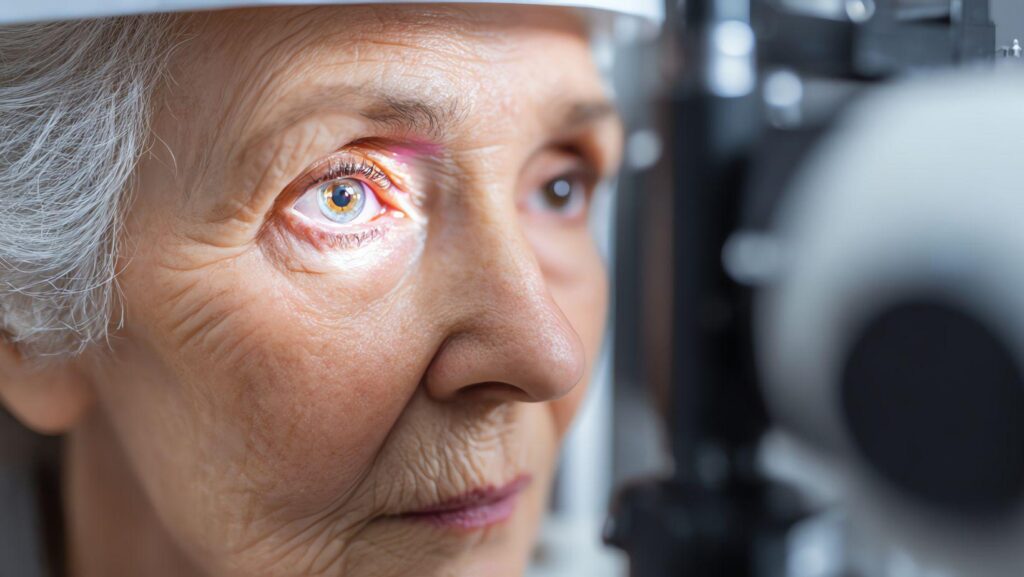
Driving is closely connected to independence, confidence, and daily freedom. When cataracts begin to develop, many people notice subtle changes before realizing their vision is affected. A familiar road may suddenly feel harder to navigate at night. Streetlights may appear surrounded by halos. Oncoming headlights may feel painfully bright. Dr. Mann understands that for many adults researching cataract surgery Houston options, driving difficulty becomes one of the first major reasons they seek professional care.
Cataracts develop when the natural lens of the eye becomes cloudy over time. This clouding scatters incoming light and reduces the sharpness and contrast needed for safe driving. According to the National Eye Institute, cataracts are one of the leading causes of vision impairment worldwide and become increasingly common with age.[1]
Many patients initially assume poor driving conditions are caused by fatigue, aging, or weather. However, cataracts often change visual performance gradually enough that people adapt without noticing how much their vision has declined.
Why Headlights Suddenly Look Blinding at Night
Night driving is often the first activity affected by cataracts. The clouded lens causes light entering the eye to scatter instead of focusing clearly on the retina. This creates glare, halos, and starburst effects around headlights and traffic signals.[2]
Drivers may notice that bright lights feel unusually intense or disorienting. Wet roads can worsen the problem because reflections multiply the scattered light. Some patients avoid nighttime driving entirely because it becomes stressful or exhausting.
Cataracts can also reduce contrast sensitivity. This means drivers may struggle to distinguish pedestrians, lane markings, or dark-colored vehicles in low-light conditions.[3]
These changes may occur even when standard vision tests still appear relatively acceptable.
Dr. Paul Michael Mann, MD, FACS, explains: “At Mann Eye Institute, we often see cataract patients who do not realize how much safer and more comfortable driving can feel after modern cataract surgery restores visual clarity.”
The Hidden Reason Road Signs Become Harder to Read
Many people with cataracts notice they can still read large objects but struggle with details at a distance. Street signs may appear faded or blurry until they are very close. Exit numbers can become difficult to identify quickly enough for safe decision-making.
This issue often develops because cataracts reduce image sharpness and interfere with color perception.[4]
Green highway signs, white lettering, and reflective surfaces may lose contrast, particularly during sunrise, sunset, or rainy weather.
Drivers in safety-sensitive professions may notice these visual changes earlier than others. Commercial drivers, pilots, and individuals who spend long hours on the road often rely heavily on fast visual processing and depth perception. Cataracts can interfere with both.
Some people compensate by driving more slowly or avoiding unfamiliar routes. Others rely more heavily on GPS systems because reading signs becomes increasingly difficult.
How Cataracts Can Turn Everyday Driving Into a Stressful Experience
Driving depends on rapid visual interpretation. The eyes constantly process movement, distance, color, brightness, and depth. Cataracts disrupt this system gradually but consistently.
Patients commonly report increased anxiety behind the wheel. Busy intersections may feel overwhelming. Merging onto highways may require greater concentration. Glare from sunlight can make daytime driving uncomfortable.
Research published in ophthalmology literature has shown that cataracts are associated with reduced driving performance and increased difficulty during visually demanding conditions.[5]
Many adults delay treatment because they believe cataracts are simply part of normal aging. While cataracts are age-related in many cases, the visual limitations they create are treatable.
The emotional impact should not be underestimated. Losing confidence while driving can reduce independence and affect social participation, work responsibilities, and quality of life.
Are You Squinting More Behind the Wheel Without Realizing It?
Squinting is one of the body’s natural attempts to improve focus temporarily. Patients with cataracts may squint more frequently while driving because narrowing the eyelids can reduce incoming scattered light.
Some people also experience increased eye fatigue or headaches after driving. Extended concentration places additional strain on the visual system when cataracts reduce clarity.
Drivers who wear glasses may notice that prescription changes become less effective over time. Frequent updates to glasses prescriptions can sometimes signal progressing cataracts.[6]
Color perception may also shift subtly. Whites can appear yellowed. Traffic lights and brake lights may seem less vivid. These changes often occur slowly enough that patients do not recognize the progression immediately.
The Freedom Many Drivers Regain After Cataract Surgery
Modern cataract surgery is designed to remove the cloudy natural lens and replace it with a clear artificial intraocular lens. According to the American Academy of Ophthalmology, cataract surgery is one of the most commonly performed and successful surgical procedures worldwide.[7]
Many patients report significant improvements in driving comfort following surgery. Reduced glare, sharper contrast, and clearer distance vision can make both daytime and nighttime driving feel easier again.
Lifestyle goals are increasingly important during surgical planning. Some patients prioritize distance vision for driving. Others focus on reducing dependence on glasses. Premium lens technologies may help support specific visual priorities depending on candidacy and ocular health.
Recovery is typically faster than many people expect. Most patients resume normal daily activities within a relatively short period, although individual healing timelines vary.
What to Expect When You Finally Decide to Treat Cataracts
The decision to pursue cataract surgery often begins with a comprehensive eye examination. Eye specialists evaluate lens clarity, retinal health, corneal shape, and overall visual function before recommending treatment.
Technology now plays a major role in surgical customization. Advanced diagnostics can help surgeons select intraocular lenses tailored to patient lifestyles, occupational demands, and visual preferences.
Risk tolerance also matters. Some patients prefer long-established lens technologies with extensive long-term data. Others are interested in advanced premium lens options designed to reduce glasses dependence.
Patients with chronic dry eye, diabetes, glaucoma, or previous eye surgeries may require additional evaluation before surgery.[8]
How Modern Cataract Surgery Helps You Stay Independent Longer
Maintaining independence is one of the most meaningful benefits associated with improved vision. Clear vision supports safer mobility, social engagement, and continued participation in work and hobbies.
Many adults delay surgery because they worry about recovery, discomfort, or surgical risks. However, modern cataract surgery uses highly refined microsurgical techniques supported by advanced imaging and laser-assisted technology in some cases.[9]
Technology-forward practices such as Mann Eye Institute emphasize patient education, personalized surgical planning, and long-term vision goals as part of comprehensive cataract care.
Improved vision may also support emotional well-being. Patients often describe feeling more confident, active, and socially connected after treatment.
When It’s Time to Stop Blaming “Bad Lighting” for Vision Problems
Many people spend years adapting to cataracts before seeking help. They increase screen brightness, avoid nighttime driving, sit closer to televisions, or purchase stronger glasses. Eventually, these adjustments stop working effectively.
Difficulty driving safely should never be ignored. Cataracts may progress slowly, but the impact on quality of life can become substantial over time.
Clearer vision can improve more than eyesight alone. It can restore confidence, comfort, and independence during everyday activities that once felt effortless.
References
[1] National Eye Institute, “Facts About Cataract,” updated 2023.
[2] American Academy of Ophthalmology, “Symptoms and Causes of Cataracts,” updated 2024.
[3] Aslam TM et al., “Cataract and Driving Performance,” published in ophthalmology literature, 2016.
[4] National Eye Institute, “Cataracts Overview,” updated 2023.
[5] Owsley C et al., “Vision Impairment and Driving,” published in Investigative Ophthalmology & Visual Science, 2018.
[6] Mayo Clinic Staff, “Cataracts Symptoms and Causes,” updated 2024.
[7] American Academy of Ophthalmology, “Cataract Surgery Overview,” updated 2024.
[8] National Institutes of Health, “Preoperative Considerations in Cataract Surgery,” published 2021.
[9] FDA, “Laser-Assisted Cataract Surgery Devices,” updated 2023.