
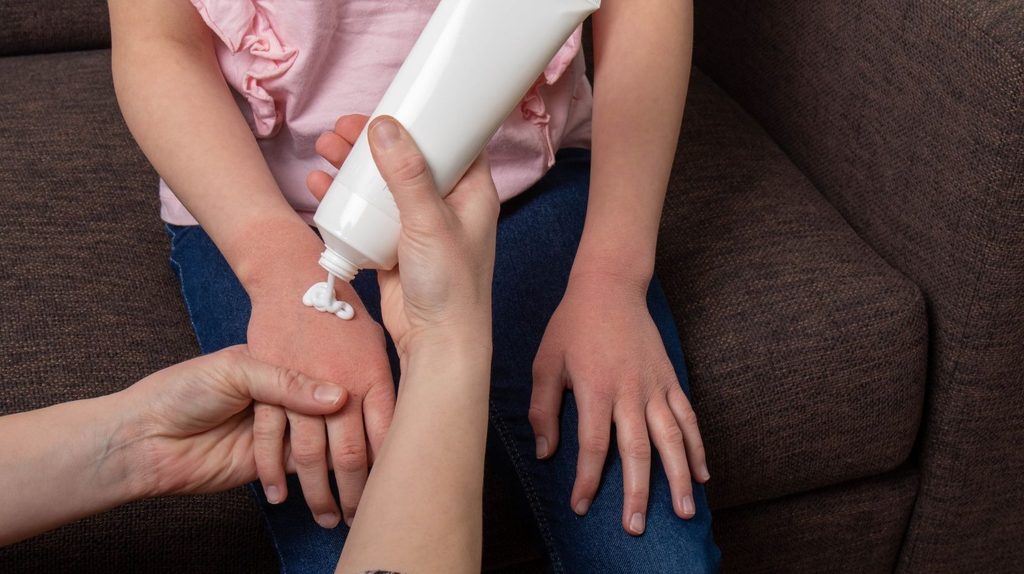
Eczema is a specific skin condition that often accompanies health issues, has a genetic origin, or manifests suddenly under stressful pressure. In any case, the skin attacked by eczema brings suffering to a person. Yet, even the most severe cases of eczema can be reduced with the help of special topical products. An eczema cream is an example of such products. So, let’s learn more about what it is, which types of creams can come in handy for eczema-prone skin, and how to use them properly to get the desired relief.
Understanding Eczema-Prone Skin
Eczema (atopic dermatitis) compromises the skin’s outer shield, making it highly vulnerable to allergens, irritants, and bacteria. At once, it looks and acts differently depending on the person’s age, the phase of the disease, and specific skin conditions.
Typically, the most distinctive symptoms of eczema are as follows:
- Severe dryness and skin flaking. The skin is unable to retain water and suffers from dehydration, which makes it look rough, scaly, and sandpaper-like.
- Redness is another common symptom. Inflamed red patches appear on the skin.
- Formation of fluid-filled blisters is also a sign of eczema-prone skin in its acute phase.
- In a severe form, painful cracks can appear on the skin.
Therefore, when you have eczema-prone skin, you are exposed to high risks of dryness, redness, itching, scaling, and dehydration. All these risks need to be mitigated, and special medicated skincare products are designed for this.
Types of Creams for Eczema-Prone Skin
Creams for skincare are the most sought-after products for self-care rituals. In terms of eczema-prone skin, several specific types of creams should be used.
1. Moisturizers are the first-line help for skin treatment. Eczema causes the skin to lose fluids, and thus, potent moisturizing creams can help cope with that.
2. Emollient-rich creams contain special oils and compounds that create a protective barrier on the skin surface to isolate it from allergens and pathogens.
3. Medicated products (namely, topical corticosteroids and non-steroidal medicated products) are used under a prescription. They suppress active flare-ups, swelling, and tame itching.
While the first two types are good for regular daily use and support, medicated options are assigned during acute phases of eczema.
Ingredients Commonly Found in Eczema Creams
As usual, creams for eczema-prone skin contain high amounts of the following ingredients:
- Moisturizers like Hyaluronic acid, glycerin, or aloe vera.
- Emollients and occlusives like Squalane, petrolatum, shea butter, and colloidal oatmeal.
- Ceramides, which act like a ‘mortar’ between skin cells’ ‘bricks’.
At once, the stop-list of ingredients you should avoid if your skin is prone to eczema includes synthetic fragrances, essential oils, drying alcohols, and parabens.
How to Choose an Eczema Cream
For the best choice of eczema cream, you need to evaluate each product’s core features:
- Whether it is fragranced or not? Better to choose fragrance-free creams or those aromatized with natural components.
- Texture also matters. For moisturization, you need lighter textures, while for barrier support, denser ointments can work better.
- Always check the list of active ingredients and discard the products that contain components from the stop-list.
- Check the labels and manufacturer’s instructions to decide on the safety and efficiency of a chosen cream.
- Better buy such products from reputable sellers working with certified and reliable cosmetics brands.
How to Incorporate Cream Into a Skin Care Routine
Once you buy a special eczema cream, it’s time to decide how to use it properly. The core rule is that you should apply the cream according to the instructions and only after delicate skin cleansing. For medicated products, always consult your doctor about their use.
When to Seek Medical Advice
Eczema is a tricky skin issue. In some people, its management is quite an easy task, while in some cases medical advice. If you notice that even after using a special eczema cream, the skin condition is worsening, the symptoms become more severe, and the skin is looking infected, there is no time for hesitation. Better contact your doctor immediately.
Living with eczema-prone skin is a constant challenge. Yet, with modern pharmaceutical and cosmetic products, like eczema creams, you can make it easier. If you select a high-quality eczema cream with active components and proven efficacy, you can develop effective self-care routines. However, in any case of worsening symptoms, professional guidance is necessary, so don’t rely only on creams and follow the recommendations of your therapist.