

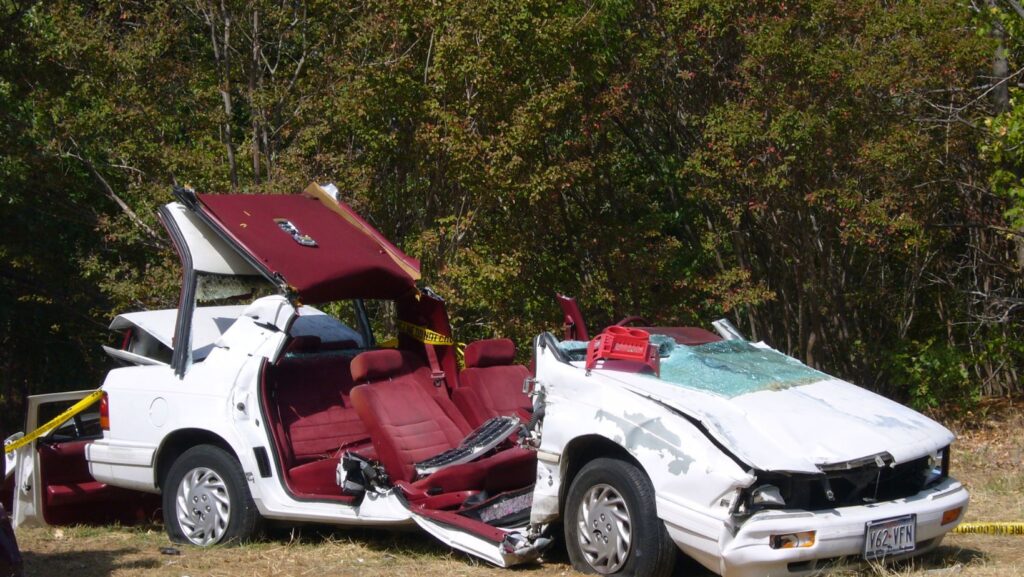
Of all types of vehicle collisions, head-on accidents are arguably the most catastrophic. Why is this? Primarily, it’s due to the physics involved, but external factors are usually involved as well.
What Are The Physics Of A Head-On Collision?
When two vehicles collide head on, their speeds can combine, so if both are going a sedate 30 mph, for instance, the impact can be the same as colliding with a stationary object at 60 mph, and the vehicle with the lesser speed will receive the greater impact. Fatalities can occur even at relatively low speeds due to the other factors involved in a head-on collision, and substantial bodily damage can also be incurred.
The human body, especially the head, isn’t designed to absorb that kind of impact. Even when there’s no direct impact between the head and another object, the sudden deceleration causes the brain to move about within the skull, and traumatic injury can occur to the brain when it repeatedly slams against the skull bones. Some of the injuries to the brain can include:
- Bleeding and blood clots
- Bruising, especially when high speeds are involved
- Contusions and concussions
- Neurological damage due to the back-and-forth motion
- Skull fractures, especially when high speeds are involved
Even when the crash is minor, it can cause brain trauma due to rapid deceleration. Since injuries may not be visible, it’s imperative to seek immediate medical attention because the injuries may be life-threatening. Some of the results from a head-on collision include dizziness, mood changes, nausea, seizures, or vision problems.
Why Are Head-On Collisions So Deadly?
Head-on collisions tend to be more deadly than other types of collisions, accounting for about 10 percent of all vehicle fatalities, even though they’re only about 2 percent of collisions. Extreme deceleration is the primary factor in this statistic, even though modern vehicles are equipped with an abundance of safety features that are designed to absorb the energy of two colliding vehicles, thereby decreasing the rapid, damaging deceleration. Airbags, crumple zones, and seatbelts can all reduce the impact of rapid deceleration, but they won’t completely eliminate the damage caused.
Rapid deceleration is the primary cause of any brain damage caused by a head-on collision. Your brain is a soft mass of tissue, similar to jelly, so it doesn’t have any protection when it’s being tossed about inside your skull. When you suffer a basilar skull fracture due to your neck being whipped around, even if you’re wearing a seatbelt, it exacerbates the consequences of brain damage and can be fatal.
The remainder of the body can be seriously damaged by rapid deceleration as well. None of your organs is firmly anchored in place. They’re all designed to move with your body; they’re not designed to suddenly move, stop, move, stop, and so forth. When rapid deceleration causes the move-stop motion, your body can experience tears and organ failures in varying degrees. Some may be more harmful than others, but all will cause a degree of damage to your body.
How Is the Impact Of A Head-on Collision Different?
A rear-end collision typically causes back pain, neck injury, or whiplash due to the sudden impact of one vehicle striking another vehicle in the rear. Although rear-end collisions can be serious, they’re less likely to cause a fatality than other types.
T-bone collisions, also called side-impact collisions, are equally deadly or more so than head-on collisions because of the lack of side protection in vehicles and the resultant damage to the brain.
Multi-vehicle collisions can be more deadly because of the greater number of vehicles involved.
Rollover accidents have higher rates of death and severe injury per incident, but they occur less frequently.
However, head-on collisions occur more frequently and generally involve more factors than other types of collisions, so the damage is more severe. Rapid deceleration is the primary cause of the bodily damage done in both a head-on collision and most other types of collisions, but a head-on collision is considered one of the most damaging types of collisions.
What To Do If You’re Involved In A Head-on Collision
If you’ve been involved in a head-on collision, it’s imperative that you seek immediate medical attention. Even if you don’t experience any adverse symptoms, it doesn’t mean that your body hasn’t been damaged. Delaying treatment won’t resolve any issues and may even exacerbate them, so seek medical attention without delay.
Be sure to document any and all adverse events you suffer, any treatments you receive, and the results of any tests you get. Some symptoms may not appear immediately, so in addition to immediate medical attention, you should also seek follow-up visits until your medical professional determines otherwise. Pay attention to your body and any signals it may be sending you, such as unusual dizziness or brain fog, or any other physical issues.
If you decide to pursue legal remedies, be sure to take all your documentation and photos with you when you go to your legal appointment. If you decide to pursue legal remedies, don’t feel guilty about your decision. You didn’t ask to be involved in a head-on collision, so there’s no guilt involved when standing up for your rights. Sometimes, the damage from injuries doesn’t appear immediately, so you may suffer long-term consequences from injuries you’ve incurred, and you should be compensated for your loss.
If you’ve been involved in a head-on collision, a hard-working car accident lawyer can help you determine if you have legal recourse for injury and damages.