

Many people are aware of the dangers of drunk driving. However, fewer know that drowsy driving can be just as dangerous. Drivers who fall asleep behind the wheel can cause catastrophic accidents that injure innocent people, necessitating the services of an experienced car accident lawyer. Both fatigued driving and drunk driving impair a driver’s abilities, slowing reaction times, blurring judgment, reducing alertness, and hindering information processing> Yet, as few measures of fatigued driving exist, this charge can be difficult to prove legally.
Equivalent Impairment Levels and Shared Symptoms of Fatigue and Intoxication
The Centers for Disease Control use blood alcohol levels (BAC equivalents to show the severity of sleep deprivation on driving behaviors. When someone has been awake for 17-18 hours, they experience the same responses as some with a 0.05% BAC. This means response speed is 50% slower and accuracy is significantly reduced. When someone has been awake for 24 hours, the BAC equivalent is 0.10%, which is above the legal limit for drunk driving.
Both conditions affect the central nervous system, leading to similar dangerous behaviors on the road. Consider the following issues:
- Slowed reaction time for braking and steering away from hazards
- Failure to see road signs, exits or changes in traffic patterns
- Impaired judgment resulting in unnecessary risks or accurately assessing vehicle speed
- Physical issues, including heavy eyelids and frequent yawning
- Visual problems involving depth perception
In addition, drowsy drivers often experience a phenomenon called “microsleep,” three to five seconds of involuntary sleep, resulting in no driver control. When a drowsy driver experiences microsleep on a highway, the vehicle can travel the length of. a football field.
Differences in Detection
Police can confirm intoxication via breathalyzer or blood tests. However, there is no equivalent test for drowsiness. Instead, police must rely on visual signs like drifting between lanes or other erratic driving behaviors. A lack of skid marks at an accident scene, an indicator that a driver never attempted to brake, is common. This lack of specific parameters makes drowsy driving more difficult to prove legally.
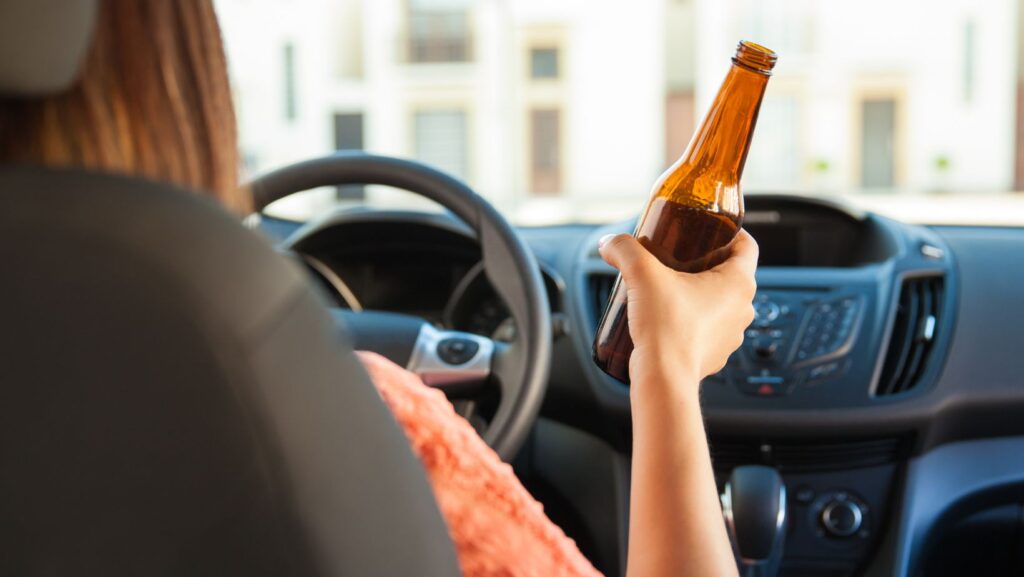
Many drivers know they are sleepy but underestimate the severity of their condition. Drivers who feel “moderately” drowsy are actually seriously impaired and are more likely to continue driving than those who realize that they are drunk.
Common Causes of Drowsy Driving and Tips to Avoid It
About 9-10% of accidents involve drowsy driving, a figure that is much higher than most people realize. The National Highway Traffic Safety Administration (NHTSA) indicates that approximately 91,000 crashes per year involve fatigued drivers. Some experts indicate that fatalities from drowsy driving crashes may be as high as 6,000 per year.
Despite knowing the risks, many drivers don’t get enough sleep. The Centers for Disease Control and Prevention (CDC) reports that about one-third of adults get less than seven hours of sleep per night. The problem is widespread in the trucking industry as drivers often are paid by the mile, so they drive as much as they can. Some trucking companies demand unrealistic delivery deadlines, necessitating long hours. Even though federal standards for truckers and trucking companies are in place, some ignore these rules, putting truckers and others on the highway at risk.
While you may not be able to control your schedule, you can take steps to protect yourself and others before getting on the road:
- Aim for at least seven hours of sleep each night
- Plan breaks for long trips and stop every two hours
- Use rest areas if you are feeling sleepy to take a short nap
- Avoid driving late at night as most fatigue-related accidents occur between midnight and 6 a.m.
- Use available technology like land-departure warnings and alerts that can warn you when drifting or losing focus
Taking steps to prevent drowsy driving may help save your life or eliminate the risk of serious injury.