
When the House Feels Like It’s Breathing Against You
There’s a specific kind of discomfort that old windows create — and if you’ve lived with it, you know exactly what it feels like. The cold draft that sneaks in on January mornings even though you’ve checked the seals twice. The blinding afternoon glare that makes your living room unwatchable between 3 and 5 PM. The condensation that fogs up the glass every single winter, leaving those faint mineral rings that no amount of vinegar spray will fully erase. These aren’t minor annoyances — they quietly erode the quality of daily life inside your own home.
And yet, surprisingly, many American homeowners treat window replacement as something cosmetic, a luxury reserved for major renovations. That perception, it turns out, is quite costly. According to the U.S. Department of Energy, heat loss and heat gain through windows account for 25–30% of residential heating and cooling energy use. That’s not a rounding error — that’s roughly a quarter of your utility bill leaking through the glass. For homeowners starting to research where to begin, platforms like windowreplacementcontractor.com offer a structured starting point for understanding options by region and window type.
The good news: replacing outdated windows addresses multiple problems at once. This article is about what that process actually looks like, what numbers to expect, and how to make decisions that will matter years from now.
The Physics of Warmth — What Modern Frames Actually Do
Here’s something that doesn’t get explained often enough: window performance isn’t just about the glass. It’s about the entire system — frame material, glazing layers, gas fill, and edge spacers working together. Single-pane windows, which are still found in roughly 35% of U.S. homes built before 1980 according to the American Housing Survey, have a U-factor around 1.2. A modern double-pane low-E window typically sits between 0.25 and 0.30. That difference, nadо заметить, isn’t incremental — it’s transformative.
Low-emissivity (low-E) coatings are, frankly, one of the more underappreciated technologies in residential construction. A microscopically thin metallic layer applied to the glass surface reflects infrared radiation without blocking visible light. What this means in practice: your home stays warmer in winter without losing natural light, and cooler in summer without needing blackout curtains. The National Fenestration Rating Council (NFRC), which independently tests and certifies window performance, found that low-E windows can reduce energy loss by up to 30–50% compared to standard double-pane units.
Frame material deserves its own mention. Vinyl frames, which dominate modern window design USA markets today (holding over 60% market share according to Window & Door magazine), resist moisture, don’t require painting, and provide solid insulation value. Fiberglass frames outperform vinyl in temperature extremes but come at a 20–30% cost premium. Wood remains an aesthetic choice — beautiful, yes, but demanding. Aluminum? Efficient in commercial contexts, but thermally problematic in residential settings without a proper thermal break.
If you’re unsure which combination makes sense for your specific climate zone, matching frame and glass specifications to your region is something many homeowners skip — to their later regret.
Light as Architecture — How Glass Geometry Reshapes Interior Space
Most people think about windows in terms of what they keep out — cold, heat, noise. Fewer think about what windows bring in, and how strategically they do it. Natural light, when handled well, is arguably the most powerful interior design element available. It costs nothing to run, changes character through the day, and has documented effects on mood and productivity. A 2014 study published in the Journal of Clinical Sleep Medicine found that workers in offices with windows slept an average of 46 minutes more per night than those without. The residential equivalent is harder to measure but likely comparable.
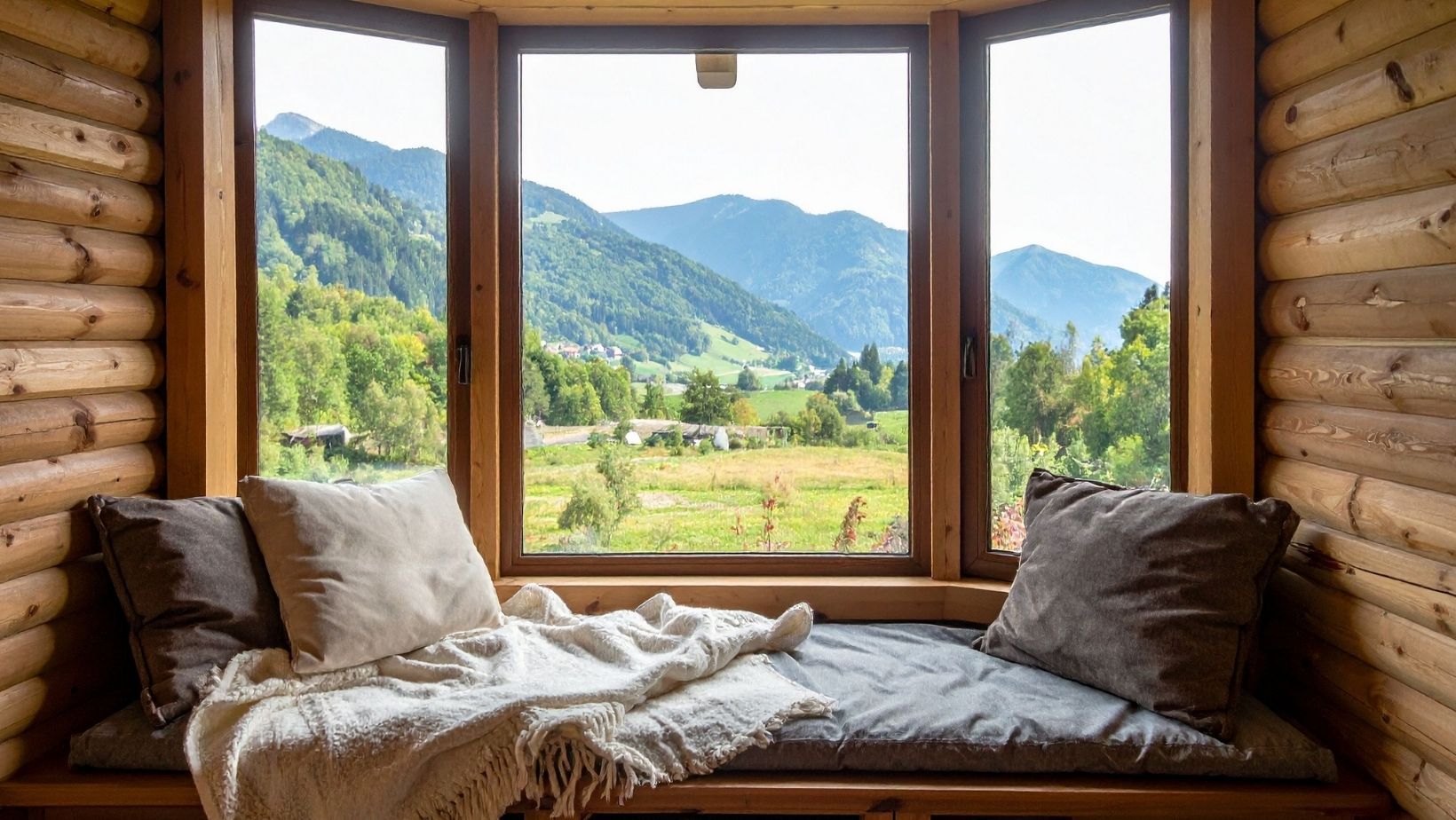
Replacing a standard double-hung window with a larger casement or picture window in the right wall position can, quite literally, change how a room feels. Not cosmetically — structurally. The angle of entry, the depth of the reveal, the sill height: these determine whether morning light falls on the floor or the table, whether the view frames a garden or a fence. Modern window design in the USA has moved significantly toward larger glass-to-frame ratios in recent years, with slim-profile frames that maximize the glazed area.
There’s also the question of window placement relative to compass orientation. South-facing windows, ideally with proper overhangs, capture passive solar heat in winter while remaining shaded in summer. East-facing windows bring gentle morning light without afternoon glare. West-facing glass, without proper shading, can turn a living room into a greenhouse by late afternoon. These are, it should be said, details that most window salespeople won’t bring up unless you ask directly.
What the Numbers Look Like Over Time
Let’s be concrete about home comfort windows and return on investment — because the financial side of window replacement benefits is often presented vaguely.
| Window Type | Average Cost per Window (installed) | Annual Energy Savings | Payback Period |
| Single → Double Pane Low-E | $300–$600 | $125–$465/year* | 3–6 years |
| Double → Triple Pane | $500–$1,000 | $50–$150/year | 5–10 years |
| Standard → Fiberglass Frame | $600–$1,200 | $100–$300/year | 4–7 years |
*Source: EnergyStar.gov estimates for U.S. climate zones
Beyond energy savings, resale value matters. Remodeling Magazine’s annual Cost vs. Value Report consistently places vinyl window replacement among the top 10 projects by ROI, with a national average return of approximately 68–72% of the project cost in home value — though in high-demand markets, that figure climbs higher.
Key factors that affect payback period:
- Climate zone (higher heating/cooling demands = faster payback)
- Number of windows being replaced simultaneously (bulk installation reduces per-unit labor cost by 15–20%)
- Existing window condition (single-pane replacements yield faster ROI than upgrading already-functional double-pane units)
- Utility rates in your area
The Quieter Argument for Replacement Nobody Talks About
Noise. Specifically, the way urban and suburban sound intrudes into homes that were designed decades before traffic volumes reached current levels. If you live within half a mile of a highway, near an airport, or even just on a moderately busy street, you may have normalized a level of ambient noise that is actually measurable and actually affecting sleep quality and concentration. This is, что особенно важно, a window problem.
Standard double-pane windows offer a Sound Transmission Class (STC) rating of around 26–28 — meaning they reduce incoming noise by roughly 26 decibels. Laminated glass with an acoustic interlayer, or windows using asymmetrical pane thicknesses (for example, 3mm and 5mm glass rather than matched pairs), can achieve STC ratings of 35–45. The perceptual difference between STC 28 and STC 38 is dramatic — what sounds like a continuous street drone becomes a background murmur.
Acoustic performance is one of the most underutilized arguments for window upgrades, and yet for anyone living in a dense area, it may deliver more day-to-day comfort improvement than any other aspect of the replacement.
The Moment to Actually Do Something About It
Reading about window performance data is useful. Acting on it is different. The gap between the two is, frankly, where most home improvement intentions die quietly. But there are practical first steps that cost nothing and take less than an afternoon.
Start with a thermal audit of your existing windows: on a cold day, hold your hand near the frame edges and glass center of each window. Feel for drafts along the perimeter. Look for condensation between glass panes — if you see it, the insulating gas seal has failed and no amount of weatherstripping will fix it. Check the operation of operable windows; one that doesn’t close fully is leaking continuously.
Once you have a sense of which windows are performing worst, prioritize replacement by exposure (south and west-facing windows in hot climates, north-facing in cold climates) and by room usage (bedrooms and main living areas first). You don’t have to replace everything at once — a phased approach, starting with the three or four worst performers, can deliver most of the benefit at a fraction of the total cost.
Window replacement, in the end, is one of those upgrades that compounds quietly. It doesn’t announce itself the way a new kitchen does. But every morning with less condensation, every summer afternoon without a sun-scorched living room, every night with street noise that stays outside — those are the actual dividends. Start where the discomfort is greatest, and work outward from there.