

Grow More Cannabis For Less Money With Automation!
Every cannabis cultivator’s dream is to produce the most with the least cost, right?
Of course, but traditional growing techniques are a huge labor-cost expense.
That’s where the latest in cannabis automation can help. There are many opportunities to increase efficiency and see an improved bottom line with the right automation systems and techniques.
In This Post, We Will Cover:
- Why Automation Is So Important for Cannabis Cultivators
- The Hidden Costs of Manual Cannabis Growing
- 4 Key Areas Automation Can Help Increase Efficiency and Lower Expenses
- Getting Started With Automation in Cannabis Cultivation
Why Automation Is So Important for Cannabis Cultivators
Cannabis is big business, which means the market will be extremely competitive. In 2024, the US cannabis market is estimated at 38.5 billion dollars. And it continues to grow.
However, there are some challenges to cannabis growing operations.
The competition is fierce.
The wholesale cannabis prices are dropping throughout mature markets like California, Colorado, and Washington. So, to do well in today’s competitive market, growers need to produce more quality cannabis for less money.
Automation can help.
Companies like Sorting Robotics offer great options for cannabis automation. Automation systems take over the mundane and repetitive tasks, allowing people to focus on high-value, complex work.
Automation is no longer “nice to have”. It is already a “need to have” for every cannabis cultivator.
Automation is coming to cannabis cultivation operations at an exponential rate. According to Cannabis Business Times, 68% of cannabis growers report to automate temperature controls. This number is increasing every year.
The Real Cost of Manual Cultivation
Labor costs are huge for cannabis cultivators. The simple truth is that cannabis cultivation is a hands-on, manual process from seed to sale.
Planting, transplanting, maintaining plants, harvesting, and post-processing each bud. Every stage of cannabis requires a human touch.
The cost can quickly add up!
For a medium-sized operation, labor accounts for 30% of total expenses. That adds up to $100,000 or more spent every month on plant-related labor.
Hourly wages are not getting any cheaper. Harvest employees now earn anywhere from $14 to $25 per hour on average. In most markets, that’s significantly higher than it was a few years ago.
Simple math. Less labor cost = more profit.
4 Key Areas Automation Can Improve Efficiency and Lower Expenses
The key to cannabis automation is not to automate everything. It would help if you were smart about where automation systems will give the highest return on investment.
Climate Control Systems
Indoor grow climate control is the lifeblood of any facility. The latest systems monitor and adjust temperature, humidity, air circulation, and CO2 levels automatically.
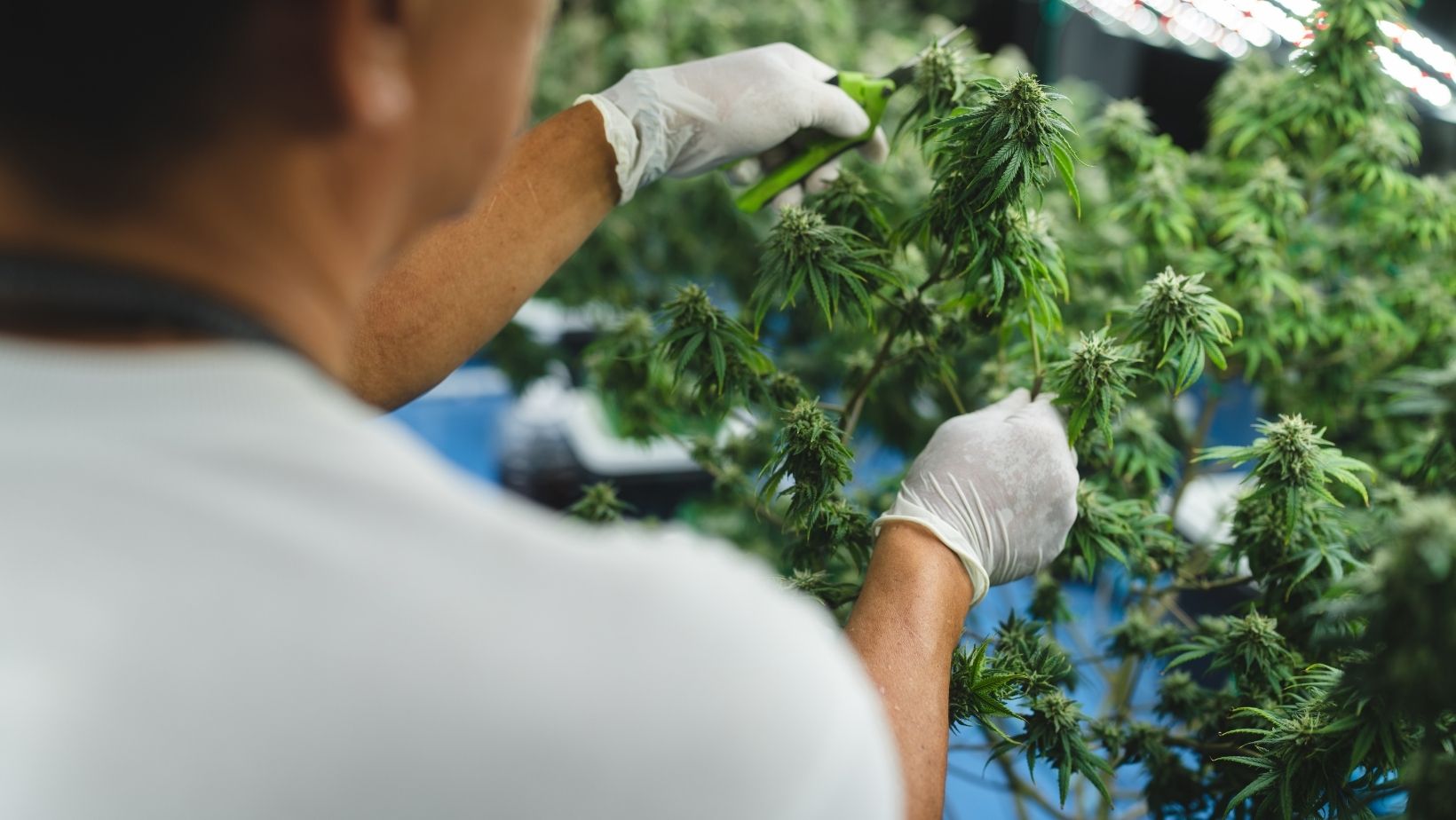
Staff no longer need to constantly check, evaluate, and tweak climate conditions throughout the day. Automated climate control systems maintain the ideal growing conditions 24/7. The result is healthier plants, better yields, and less stress on crops. Many cultivators see the return on investment in two harvests or less.
Irrigation and Nutrient Delivery
Manual irrigation is a time sink. Precisely measured watering and nutrients are vital to cannabis quality, and automated irrigation systems provide both.
By using real-time soil moisture sensors, irrigation systems ensure the right amount of water and nutrients are delivered to the roots. The irrigation system automatically calculates how much water is needed based on the current plant status.
This means no more under-watering or over-watering, which can stress plants. Staff who used to spend hours manually irrigating can now spend time doing other important tasks.
Post-Harvest Processing
Harvest is where automation really starts to shine.
Automated cannabis trimmers work much faster than a team of harvest workers while maintaining or even improving quality. One Colorado cannabis cultivator reported saving 35% on payroll after investing in automated trimming equipment.
Beyond trimming, automated bucking, sorting, and weighing help cultivators scale without directly increasing headcount. The tiny “popcorn buds” that would have been discarded in the past can now be recaptured, sorted, and used in pre-rolls or extracts.
Environmental Monitoring
AI-based sensors are becoming very popular in indoor cannabis growing. Monitoring systems track and measure data multiple times each day on each plant, such as leaf color, temperatures, and humidity.
The system then analyzes the data it is tracking to detect patterns, or subtle signs of stress before they become a problem. The dashboard will show the results, with charts and heatmaps, instead of manually checking each plant.
The Benefits Beyond Cost Savings
Cost savings are the primary motivator for cannabis automation. But it is far from the only benefit. Other benefits include:
Consistency
Robots and machines do not have bad days. They don’t get tired, distracted, or sick. Automated systems operate the same every time they run, ensuring consistent quality.
Scalability
Scaling a manual operation requires hiring more staff. It also brings training, management overhead, and risk for more inconsistency.
Automated systems make it possible to scale without those problems.
Data Collection
Automation data collection is one of the most underappreciated features. Automated systems collect more data about every aspect of the grow operation. This data can be leveraged to see where there are areas of improvement to gain more value from operations.
Reduced Risk
Too much critical knowledge should not rest in the hands of one or two employees.
Automation takes some of the knowledge out of people’s heads and hardcodes it into systems instead.
Getting Started With Automation in Cannabis Cultivation
So where should cannabis cultivators begin when it comes to automation?
The key is starting with systems and processes that have the most significant immediate impact.
Climate control and irrigation are the best starting point for most facilities. These systems are relatively low cost and have a proven, consistent ROI.
Look at the current workflows and analyze what tasks take the most time and where mistakes happen frequently.
These are often the best places to start with automation.
Look at the total cost of investment against the long-term potential savings. Quality automation equipment is not cheap upfront, but cultivators in the 5,000 to 10,000 sqft range typically reach a point where automation is highly cost-effective.
Take your time and do not try to automate everything at once. The key is to implement new systems one at a time, train the staff, and evaluate the results.
Grow More Cannabis for Less Money With Automation
Automation is no longer optional for cannabis cultivation. The market is too competitive, and profit margins too tight to rely on manual processes.
The good news is that technology is more accessible than ever. Solutions that used to be only for the largest cultivators are available for medium-sized and even smaller grows.
To recap quickly:
- Labor costs are one of the most significant expenses in a cultivation facility that automation can reduce significantly
- Climate control and irrigation systems are an excellent place to start
- Post-harvest automation, like trimming, packing, and weighing, can provide some of the most efficiency improvements
- The data collection automated systems provide help cultivators continually improve operations
Automation will be the key to cannabis cultivators’ success as the market continues to mature and evolve.
Growers who embrace technology now will be well-positioned to do well. Those who wait may struggle to remain competitive.
The technology is ready. The question is, is your operation?