
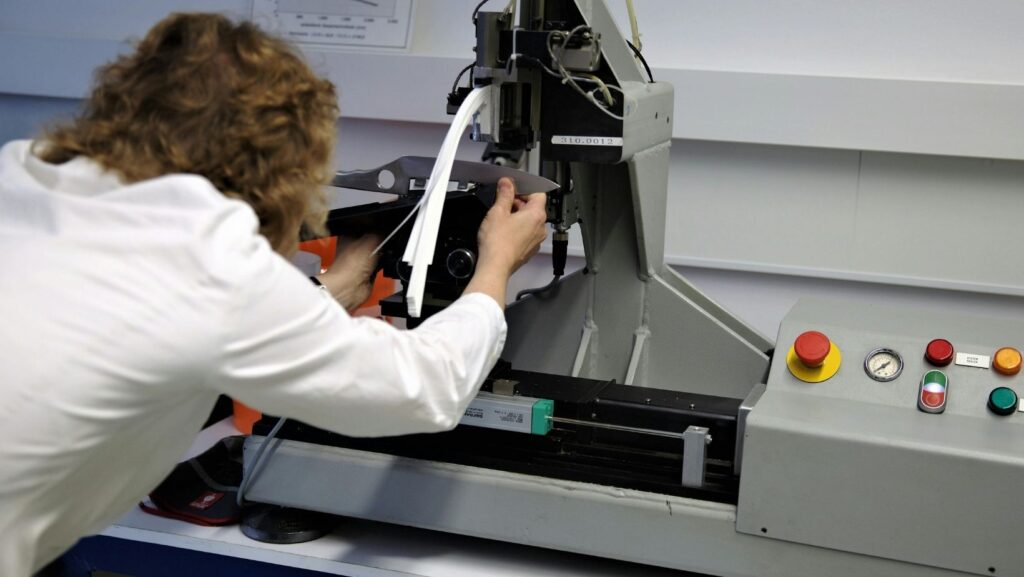
Traditional quality labs often create bottlenecks in high-precision manufacturing. I’ve seen aerospace components sit idle for days because a fixed bridge coordinate measuring machine was backlogged or the part was too large to move. The shift toward in-process measurement is a necessity. By integrating a portable CMM directly into production, we eliminate “measure-wait” або “adjust” cycles and validate geometries right at the machine tool.
Fixed CMM vs. Portable CMM: When to Bring the Tool to the Part
The core distinction lies in the environment. While a stationary coordinate measuring machine (CMM) offers higher volumetric accuracy, it requires a sterile lab. In my experience, a portable CMM is superior when parts exceed a cubic meter or are bolted into heavy fixtures.
Scenarios where portability is the only practical option:
- Large-scale assemblies: Measuring components that cannot fit through lab doors.
- In-situ alignment: Adjusting jigs and fixtures during assembly.
- Restricted lab access: Maintaining throughput during lab certifications.
- On-machine verification: Checking parts before breakdown to ensure enough stock for finishing.
Arm-Based vs. Laser Tracker Portable Systems
When selecting a portable coordinate measuring machine, the choice depends on volume and line-of-sight requirements. An arm-based CMM mimics the human limb, providing six or seven axes of rotation. I find these indispensable for reaching into “blind” cavities, offering accuracy around ±0.05 mm at 2.5 m.
For massive distances, laser tracker measurement dominates. Using a retroreflector (SMR), these systems maintain precision within ±0.025 mm at 15 meters. However, they require a clear line of sight, which can be challenging on busy shop floors.
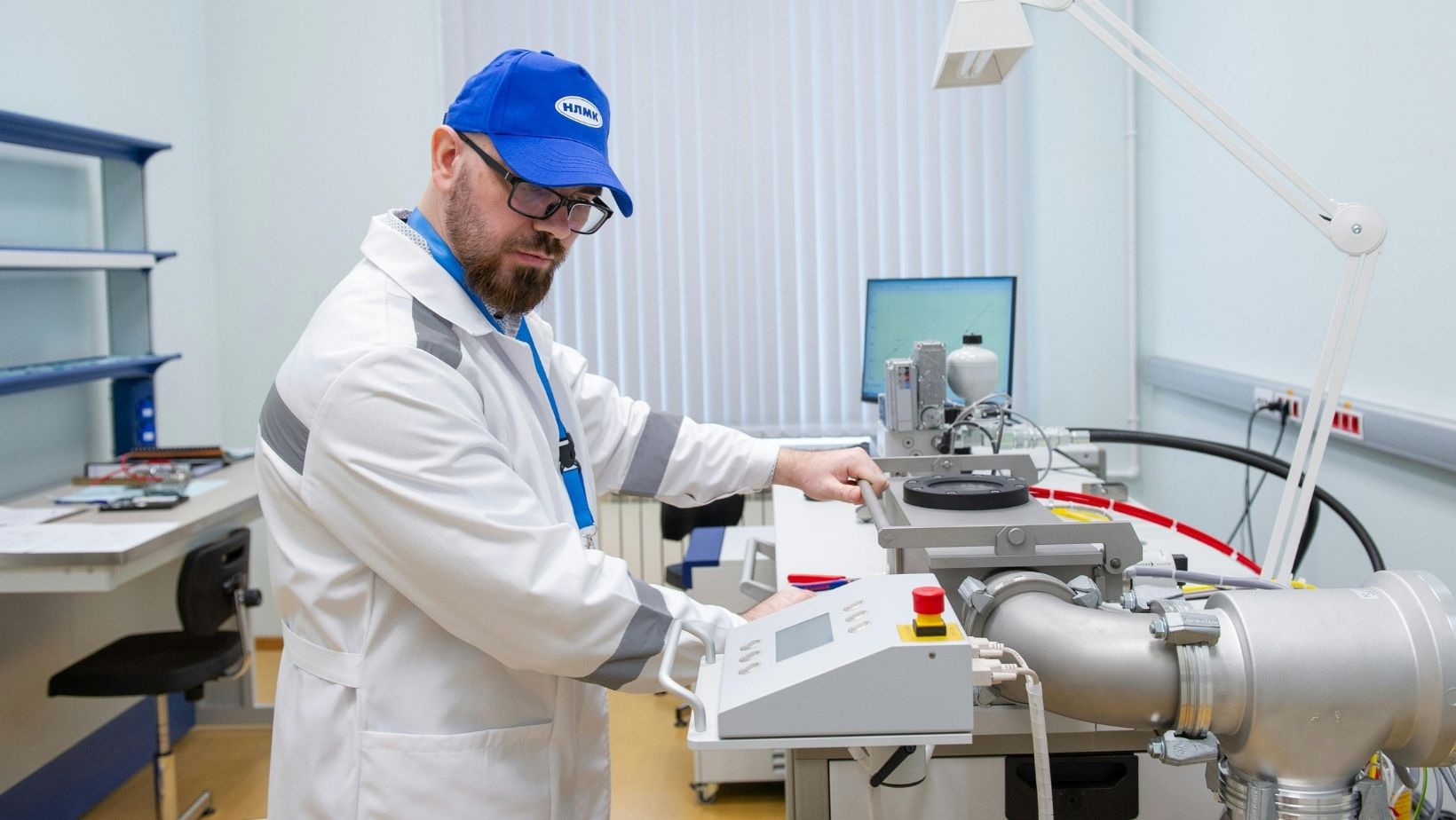
Technical Note: Temperature Drift Unlike lab units, a portable CMM is subject to thermal expansion. Modern arm-based CMM units use internal sensors to compensate, but for shop floor metrology, I recommend “soaking” the instrument in ambient air for 30 minutes before qualification.
Integrating Portable CMM into Your Quality Workflow
Deploying a portable coordinate measuring machine requires a rigorous approach to achieve repeatable results with a coordinate measuring machine:
- Rigid Mounting: Mount the base to a surface that won’t vibrate during machining.
- Stylus Qualification: Perform a sphere-fit check to account for probe tip diameter and encoder offsets.
- Alignment to CAD: Use 3-2-1 alignment to synchronize the physical part with digital nominals.
- Reporting: Generate real-time heat maps for immediate feedback to operators.
Ultimately, the goal is balancing accuracy with flexibility. While you might sacrifice microns compared to a lab-grade coordinate measuring machine (CMM), the reduction in scrap and gain in uptime offer a faster ROI. Bringing the portable CMM to the floor ensures quality is an active part of production.