
Walk down any supplement aisle or scroll through gut health content online, and three terms come up constantly: prebiotics, probiotics, and digestive enzymes. They’re often mentioned in the same breath, sometimes even bundled into the same product, which makes it easy to assume they all do roughly the same job. In reality, each one works through a completely different mechanism, and understanding those differences matters for anyone trying to manage bloating, irregularity, or general digestive discomfort.
Probiotics: Adding to the Gut’s Bacterial Population
Probiotics are live microorganisms, usually specific strains of bacteria or yeast, that are meant to support or restore a healthy balance of gut flora when consumed in adequate amounts. They’re found naturally in fermented foods like yogurt, kefir, sauerkraut, and kimchi, and are also widely available in supplement form. The idea behind probiotics is that introducing beneficial strains can help crowd out less favorable bacteria, support the gut lining, and in some cases assist with specific issues like antibiotic-associated diarrhea.
Probiotics don’t digest food directly. Their role is more about the composition of the gut microbiome over time rather than breaking down what’s on a plate in the moment. This is an important distinction, because someone struggling with symptoms right after a meal is dealing with a digestion problem, not necessarily a microbiome balance problem, even though the two are related.
Prebiotics: Feeding the Bacteria That Are Already There
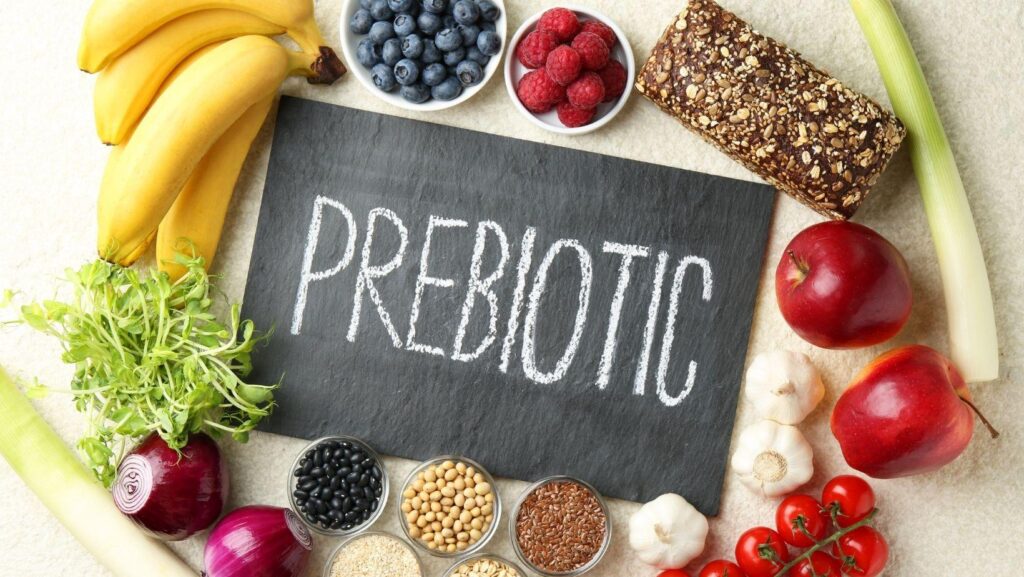
Prebiotics are a type of fiber that the body can’t digest on its own but that gut bacteria can ferment and use as fuel. Foods like garlic, onion, chicory root, and certain legumes are naturally high in prebiotic fibers such as inulin and fructans. When gut bacteria ferment these fibers, they produce short-chain fatty acids that are generally considered beneficial for colon health.
Here’s where things get complicated for anyone with a sensitive gut: many of the same fibers that act as prebiotics are also classified as FODMAPs. Inulin and fructans are prebiotic fuel for bacteria, but for someone prone to bloating or IBS symptoms, that same fermentation process can produce uncomfortable amounts of gas. This is why a food or supplement marketed as “gut-healthy” because of its prebiotic content can sometimes cause the exact symptoms someone is trying to avoid.
Digestive Enzymes: Breaking Food Down Before It Ferments
Digestive enzymes work at an earlier stage than either prebiotics or probiotics. Rather than influencing bacteria, enzymes are proteins that break specific carbohydrates, fats, or proteins down into smaller components that the small intestine can absorb directly. Lactase breaks down lactose, sucrase-isomaltase handles table sugar and certain starches, and alpha-galactosidase targets the complex sugars found in beans and cruciferous vegetables.
When these enzymes are missing, deficient, or simply overwhelmed by the amount of a particular carbohydrate in a meal, the undigested sugar travels further down the digestive tract, where bacteria ferment it, producing gas and drawing in water. This is the same fermentation process involved in FODMAP sensitivity, but the starting point is different. A FODMAP-focused enzyme supplement, like FODZYME enzyme supplement, is designed to work at this earlier stage, breaking down specific FODMAP sugars before they ever reach the colon, rather than trying to change the bacteria that ferment them afterward.
Why the Three Aren’t Interchangeable
Because all three categories are associated with digestive health, it’s tempting to treat them as variations on the same idea. But they intervene at different points in the process. Enzymes act before fermentation happens, breaking carbohydrates down so there’s less material left for bacteria to work with. Prebiotics are the material itself, feeding bacterial fermentation on purpose because that fermentation can be beneficial in moderate amounts. Probiotics add or support the bacteria carrying out that fermentation, independent of what’s being fermented.
For someone dealing with bloating after meals, this means a probiotic alone may not address symptoms tied to a specific carbohydrate the body struggles to break down. Likewise, a prebiotic supplement, despite its health halo, can actively worsen symptoms in someone who is sensitive to fermentable fibers. An enzyme approach is generally more targeted toward the moment of digestion itself, which is why it tends to produce more immediate, meal-specific relief compared to the slower, more cumulative effects of probiotics or prebiotics.
Where Each One Tends to Fit
Probiotics are often used with a longer-term view, supporting overall microbiome diversity or addressing specific situations like recovery after antibiotics. Prebiotics are usually recommended for people who tolerate fermentable fibers well and are looking to support colon health and regularity over time. Digestive enzymes are most useful in the moment, taken alongside a meal that contains a known trigger, to reduce the fermentable load before it reaches the large intestine.
None of these three approaches is inherently better than the others, since they’re solving different problems. The confusion mostly comes from marketing that lumps them together under a general “gut health” umbrella, without explaining that a probiotic won’t fix a fructose malabsorption issue, and an enzyme won’t build a more diverse microbiome.
Matching the Tool to the Actual Problem
The most useful starting point is identifying what’s actually going wrong. Someone who reacts strongly and predictably to specific carbohydrates, like dairy or high-FODMAP fruit, is likely dealing with a digestion-stage issue that enzymes are built to address. Someone dealing with general irregularity or looking to support long-term gut diversity may get more out of a well-chosen probiotic or a gradual increase in prebiotic fiber. Understanding which category actually matches the underlying issue, rather than reaching for whichever product is labeled “gut health,” tends to make a much bigger difference in how meals actually feel afterward.