
Have you noticed your chainsaw or trimmer working harder than it used to, without any clear reason why? Most experienced operators replace cutting components when they stop working. Few replace them when they stop performing well, and that gap is where job time and efficiency are quietly lost.
The more useful question is not whether a component is broken, but whether it is still worth running. This article covers the practical signs that a chainsaw chain, guide bar, or trimmer line has reached the end of its productive life, before it causes a mid-job failure or adds unnecessary time to the work.
When to Replace a Chainsaw Chain
A chainsaw chain has a productive life and a functional one, and the two do not end at the same time. The practical indicators that a chain has passed its productive life include teeth that remain rounded after sharpening, a saw that pulls to one side during cutting, and a chain that requires more passes or more pressure than usual to complete a cut. Most chains can be sharpened between five and ten times before these signs become consistent.
Once sharpening no longer restores clean cutting performance, replacement is generally the more cost-effective option. Running a degraded chain accelerates wear on the guide bar and drive sprocket, turning a straightforward consumable cost into a larger repair. If the chain is working but the saw is not cutting cleanly, the chain is the first place to check.
When to Replace a Chainsaw Bar
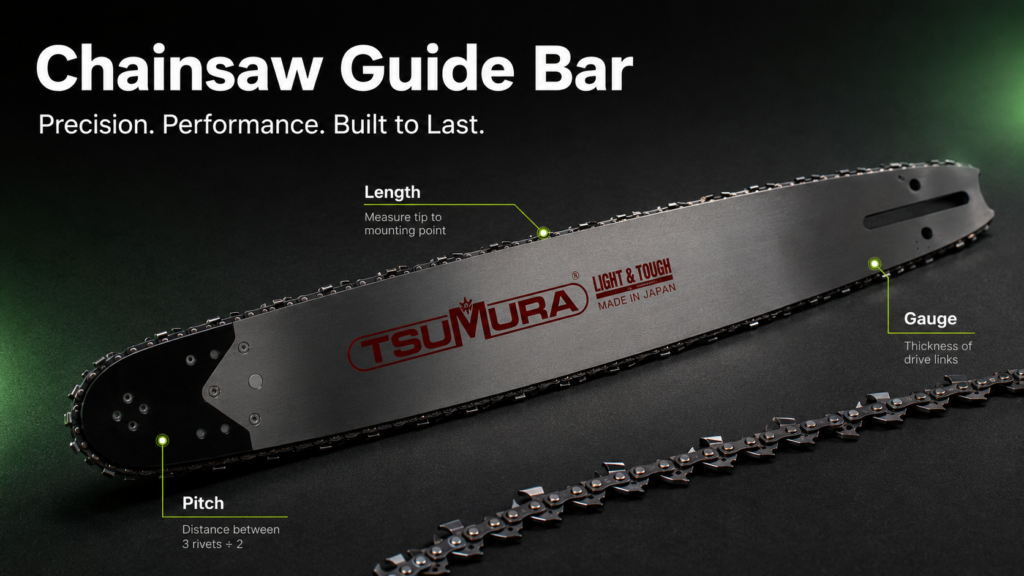
Guide bars wear more slowly than chains but are often replaced too late. The key indicators of a worn bar include a rail that is visibly uneven or pinched along the groove, a chain that wobbles side to side rather than sitting firm, a visible bend or warp in the bar body, and a sprocket nose that no longer spins freely. A worn bar reduces cutting accuracy and increases the rate at which a new chain will wear.
Inspecting the bar each time the chain is replaced is a practical habit that catches wear early. Quality bars, properly maintained, can outlast several chains. But a bar that has been run past its serviceable life will degrade chain performance regardless of how good the replacement chain is.
When to Replace Trimmer Line
Trimmer line degrades through use, UV exposure, and age, not through visible wear alone. The signs that line needs replacing include frequent breakage during normal operation rather than only on hard surfaces, a ragged or uneven cut finish despite correct technique, line that has become brittle or discoloured, and spools that are more than twelve months old even if partially unused. Degraded line generally increases fuel consumption and adds to operator fatigue over a full working day.
A reliable practical rule is that if line is breaking before it makes contact with hard surfaces, it is past its productive life. Storing line in a cool, dry location away from UV exposure extends usable life and reduces how often early replacement is needed.
The Hidden Cost of Running Worn Consumables
Worn consumables cost more in lost time than the replacement part itself, and that cost compounds across a working week. A blunt chain that adds an extra pass to every cut, a bar that reduces accuracy on detailed work, or trimmer line that breaks mid-run all add time to jobs that are often priced on a fixed quote. When a component fails entirely on site, the cost includes rescheduling, client communication, and travel back to complete unfinished work.
The cost of a replacement chain, bar, or spool of trimmer line is fixed and predictable. The cost of downtime is not. Proactive replacement is a workflow decision as much as a maintenance one, and for operators running multiple jobs a week, the margin it protects is material.
Stocking the Right Consumables
Finding replacement chainsaw chains, guide bars, and trimmer line with clearly listed specifications makes the selection process more straightforward. RG Enterprises stocks a range suited to both working landscapers and domestic property owners across Australia, with specifications listed to support confident purchasing decisions.
Replace Before It Costs You More Than the Part
The productive life of a chainsaw chain, guide bar, or trimmer line ends before the component stops functioning entirely. A chain that no longer holds an edge, a bar with uneven rail wear, or trimmer line that breaks before contact with hard surfaces are all past the point where continued use is cost-effective.
Replacing at the right time keeps equipment performing consistently and reduces the risk of mid-job failures. For operators running regular work, that timing is a practical decision, not just a maintenance one.