
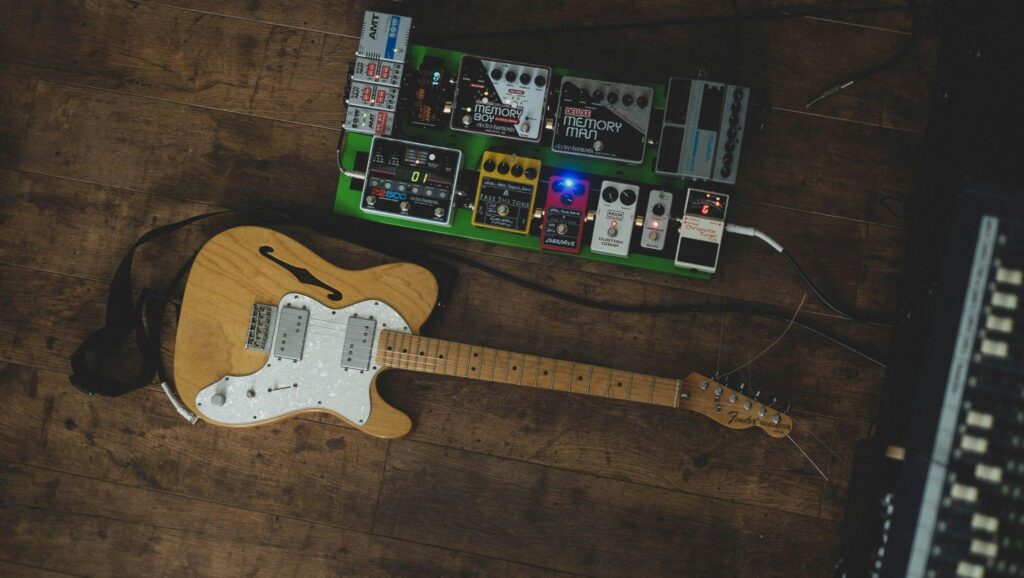
Purchasing a guitar and accessories at a price or quality point so low that everything needs to be replaced within six months is one of the most common mistakes made by beginners. Opting for instruments and accessories that are a bit more expensive, higher quality, and offer a better warranty can help ensure you have a quality setup without having to replace things regularly. Even a good quality beginner guitar amp can be used for years, even once you are no longer a beginner.
Starting With the Instrument Itself
A beginner’s guitar must be able to play comfortably, stay in tune, and function consistently. The cheapest instruments often don’t work on all three. Fretting becomes physically challenging and deters practice if the action is too high. Every session begins with irritation if the tune is unstable. It is impossible to build an accurate ear along with your technique if the tone is bad, as the guitar sounds worse as you go up the neck. A mid-range instrument from a reliable manufacturer and retailer resolves all of these issues and often lasts for many years.
The Amplifier as the Other Half of the Sound
The faint, quiet sound produced by an electric guitar without a good amplifier makes practice seem pointless. In addition to shaping your tone and providing enough volume for you to hear what you are playing, the proper amplifier, possibly most importantly, makes practising feel more like playing than drilling techniques. For bedroom and home use, a practice amplifier with a clean channel and simple tone controls in the ten to thirty-watt range is sufficient. It offers enough sound quality to keep you motivated without annoying the neighbours.
Essential Accessories Worth Buying From the Start
The most crucial piece of equipment a novice may have is a tuner. Playing out of tune hinders the growth of your musical sense and reduces the effectiveness of each session. It’s easy to prevent running out of strings in the middle of a session if you keep an extra set on hand. Anyone who will eventually play in a standing position will need a strap that keeps the guitar steady when standing. A good setup should also include essentials like cables, a guitar stand, and a few picks in various thicknesses.
Lesson Investment as Part of the Setup Budget
The majority of beginners spend all of their setup money on equipment and leave nothing for instruction. A modest instrument played with the right guidance yields better results than a good instrument played poorly. The physical foundations like posture, hand position, and picking technique that influence everything you learn later can be established in even a few lessons in the early months. A small upgrade in equipment would not have saved as much time and anguish over the ensuing years as laying those foundations correctly early.
What to Avoid in the Beginner Market
Beginner guitar packages, which are inexpensive bundles that include an instrument, a small amplifier, a cable, and accessories, can seem good but often fall short. These bundles usually include instruments priced to limit playability in ways most detrimental to novices. The amplifiers are frequently so tiny and tonally constrained that they worsen rather than improve the sound of playing. Purchasing each part separately from a reliable store, where employees can verify whether a particular instrument plays well, usually yields a better outcome for comparable or marginally higher costs.
When to Consider Upgrading
When your present equipment is actually impeding your progress is the ideal time to change any component of your setup. Just because an instrument is a novice model doesn’t mean it needs to be replaced if it plays well, stays in tune, and sounds good through a competent amplifier. Rather than the gear culture around guitar playing, which tends to treat purchasing items as a substitute for practice, the most honest response to the upgrade question typically comes from a teacher or seasoned player who is aware of your particular circumstances.
A Setup That Serves the Player, Not the Other Way Around
A beginner guitar setup that inspires you to pick up the instrument and practice often is the ultimate goal. You should be able to play comfortably without hindrance, sound nice enough to be rewarding, and not require any technical management that interferes with learning.