
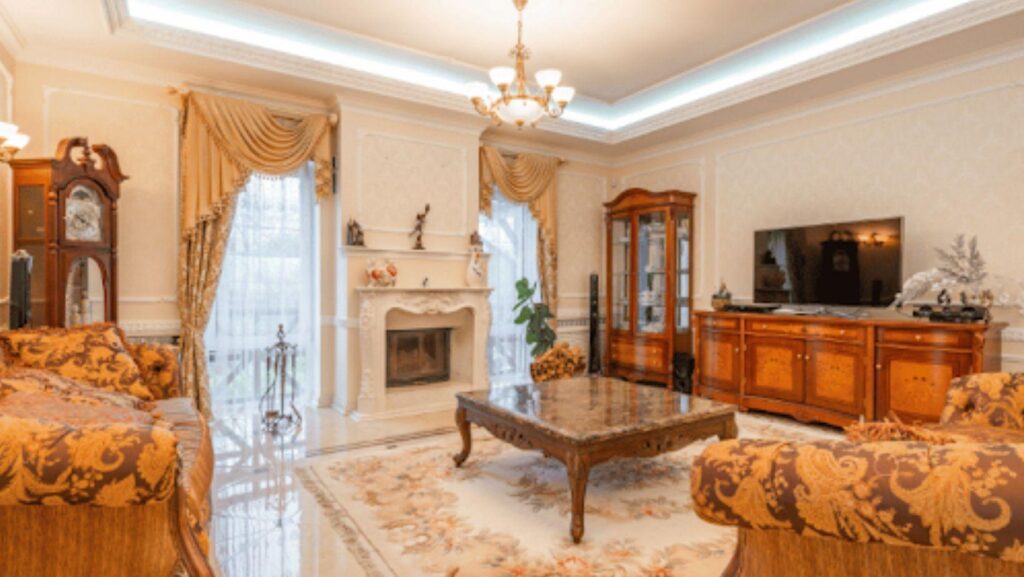
Making your home look polished and expensive does not require a luxury renovation or an entirely new set of furniture. In fact, some of the most effective changes are surprisingly small.
The secret lies in being selective. A room tends to look more refined when colors relate to one another, decorative pieces have room to breathe, and everyday clutter does not compete for attention. Texture, lighting, scale, and thoughtful placement can also change how a space feels without changing its basic layout.
If your home needs a refresh, start with the details. The following decorative changes can give familiar rooms a more considered, high-end appearance without turning them into spaces that feel overly formal or staged.
Edit the Room Before Adding Anything New
It is tempting to improve a room by immediately buying more decor. Before doing that, look at what you could remove.
Crowded shelves, overflowing side tables, tangled cables, and too many small decorative objects can make even beautiful furniture disappear into the background. Give your favorite pieces more space instead. A few carefully chosen objects will usually have more visual impact than a large collection competing for attention.
Try clearing each surface completely and rebuilding it one piece at a time. On a console table, for example, you might use a lamp, a small group of books, and one decorative object rather than covering the entire surface.
Think about visual balance as you work. If every object is the same height, the display can look flat. Varying the height and shape creates interest while keeping the arrangement controlled.
Make Your Lighting Feel More Intentional
Lighting can dramatically change the character of a room. Relying on one bright ceiling fixture often creates a flat, functional atmosphere, so introduce light at different heights instead.
Table lamps can make seating areas feel warmer, while floor lamps help fill awkward corners. Wall lights and picture lights can draw attention to artwork or architectural details. You do not need every type of fixture in every room. The aim is simply to avoid asking one light source to do all the work.
Pay attention to lampshades, too. A tired or poorly proportioned shade can make an otherwise attractive lamp look dated. Replacing it is a relatively small job that can change the appearance of the entire fixture.
Where possible, hide visible cords and keep bulbs consistent within the same room. Small details like these help the finished space feel planned rather than pieced together.
Bring in Flowers and Greenery With Restraint
Flowers introduce shape, color, and softness, making them particularly useful in rooms dominated by straight furniture lines and hard surfaces. The key is choosing arrangements that suit their surroundings.
A large arrangement can work well on a spacious dining table or entryway console. Smaller displays are often better for bedside tables, bathrooms, and compact coffee tables, where an oversized arrangement may become inconvenient.
Fresh flowers are one option, but artificial stems can be useful when you want a display that stays consistent. Jamali Garden, for example, offers bulk fake flowers that can be used when creating larger or multiple decorative arrangements. Rather than packing every vase tightly, leave some space between stems and pay attention to the proportions of the container.
The vase matters just as much as its contents. Glass, ceramic, stone-look, and metallic finishes each create a different mood. Choose one that relates to other materials already present in the room rather than treating the arrangement as an isolated decoration.
Use Textiles to Add Depth
Soft furnishings can make a room feel finished, particularly when the larger furniture pieces are simple. Look at cushions, curtains, rugs, and throws as opportunities to introduce texture rather than simply more color.
Instead of using several competing patterns, work within a controlled palette and vary the materials. Linen-look curtains, a woven rug, velvet cushions, or a softly textured throw can create depth even when the colors are fairly neutral.
Curtain placement deserves particular attention. Curtains that appear too short or narrow can make the window feel smaller. Where the room allows, positioning the curtain pole higher and extending it beyond the edges of the window can give the area a more generous sense of scale.
Jamali Garden can also provide inspiration for bringing decorative texture into arrangements through floral and botanical styling. The goal, however, should remain restraint. Expensive-looking interiors rarely depend on every surface having its own focal point.
Pay Attention to Scale and Placement
Sometimes a room feels unfinished because the decorations are simply the wrong size. A tiny picture floating above a large sofa, for instance, can feel disconnected from the furniture beneath it. Likewise, a rug that barely reaches beyond a coffee table may visually shrink the seating area.
Look at decor in relation to nearby objects. Artwork should feel connected to the wall and furniture around it. Rugs should help define a zone. Mirrors should reflect something worth seeing, such as natural light, artwork, or an attractive part of the room.
The same principle applies to decorative accessories. Instead of scattering many small objects around a large surface, consider grouping a few pieces of different heights. This gives the eye somewhere to rest and makes each object feel more deliberate.
Before buying something new, measure the space where it will go. A few minutes with a tape measure can prevent a decorative piece from looking awkward once it arrives.
Replace Small Details That Date the Room
Some of the simplest home updates involve items you touch every day. Cabinet handles, drawer pulls, switch plates, frames, and worn lampshades may seem insignificant individually, but together they affect the overall impression of a room.
Focus first on pieces that are damaged, visibly dated, or inconsistent with the surrounding finishes. You do not necessarily need to replace everything. Even updating the hardware on a bathroom vanity or bedroom dresser can give familiar furniture a cleaner appearance.
Consistency helps here. If a room already contains several metal finishes, adding more can make it feel visually busy. Repeating one or two finishes across nearby details often produces a calmer result.
Final Thoughts
A more expensive-looking home is often the result of editing rather than spending. Clear crowded surfaces, reconsider your lighting, introduce texture, and choose decorative pieces at a scale that suits the room. Then address the small details that make the space feel unfinished.
Most importantly, resist the urge to change everything at once. Work through your home room by room and pay attention to what genuinely improves each space. Thoughtful choices, good proportions, and a little restraint can make even simple interiors feel far more polished.