
If you’re planning to build a deck in Naperville, there’s one thing that matters more than picking the right decking material. It’s what’s happening under your feet. The soil in this part of Illinois isn’t like the sandy stuff you’d find in a coastal town, and it definitely doesn’t behave like the loose, well-drained ground you see in gardening guides. Naperville sits on soil that’s part of a much bigger geological story tied to DuPage County, one that involves ancient glaciers, dense clay, and a whole lot of moisture-driven movement. And that story has a direct effect on how long your deck stays level, stable, and safe.
Homeowners often skip this part of the planning process. They pick a decking board, maybe argue with their spouse about railing color, and never once ask what’s below the surface. But foundation problems don’t show up right away. They creep in over a few seasons, and by the time you notice a wobble or a gap near the house, the damage is already done. Understanding your soil first can save you thousands down the road.
What Makes Naperville’s Soil So Different
The ground under most of Naperville is dominated by a type of soil geologists call high plasticity clay. This isn’t your average dirt. It’s dense, sticky when wet, and rock hard when dry. That’s a direct result of the glacial activity that shaped this whole region thousands of years ago. As glaciers moved across what’s now DuPage County, they left behind layers of compacted material called glacial till, a mix of clay, silt, sand, and rock fragments that varies wildly even within short distances.
That variability is the tricky part. You could dig a footing hole in your backyard and hit dense clay, then move ten feet over and hit a pocket of sandier soil. In some parts of Naperville, especially toward the northwest, there’s also shallow dolomite or limestone bedrock sitting closer to the surface than most people expect.
The clay itself behaves almost like a sponge crossed with modeling clay. Add water, and it swells up. Let it dry out during a hot Illinois summer, and it shrinks back down and cracks. Builders sometimes call this the “play-doh effect,” because that’s basically what it does. Squeeze it, and it holds a shape. Let it dry, and it changes completely.
Why This Soil Is Risky for Deck Foundations
Here’s where things get real for anyone hiring Naperville deck builders. That constant swelling and shrinking is called a shrink-swell cycle, and it puts ongoing pressure on anything sitting in the ground, including your deck’s support posts. Every time the soil expands with spring rain and then contracts during a dry August, your footings get pushed, tilted, or loosened just a little bit more.
Clay also drains poorly. Instead of letting rainwater pass through, it holds onto moisture right around your footings, which speeds up the shrink-swell damage and increases the risk of frost heave in winter. On top of that, clay simply doesn’t carry weight as well as sand or gravel. Where sandy soil might support 3,000 pounds per square foot without much fuss, dense clay often maxes out somewhere around 1,500 to 2,000 pounds per square foot, depending on moisture content and compaction.
Put all of that together and you get a pretty clear list of what can go wrong:
-
Cracked or heaved concrete footings from repeated freeze-thaw and shrink-swell cycles
-
Leaning or tilted support posts that throw off the whole deck’s level
-
Uneven settling that creates gaps between the deck and the house
-
Squeaky, bouncy decking caused by shifting understructure
-
Water pooling near footings due to poor clay drainage
None of these show up overnight. They build slowly, which is exactly why so many homeowners get blindsided a few years after installation.
Foundation Options That Actually Work in Clay
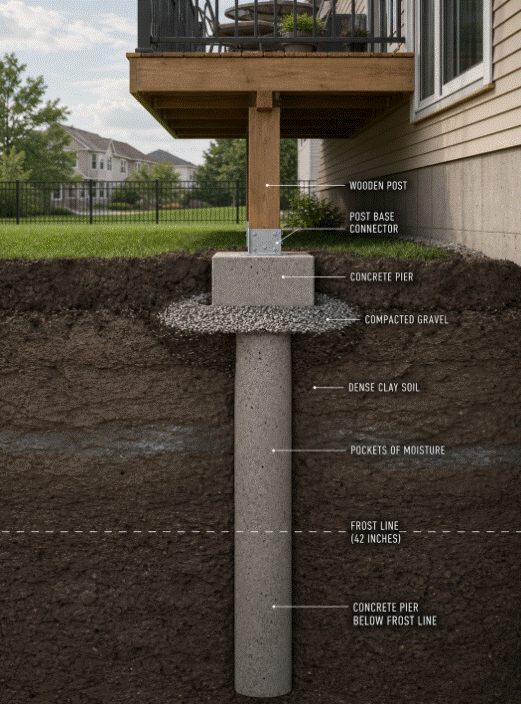
The good news is that experienced builders have plenty of ways to work around difficult clay. Traditional poured concrete footings can still work, but only when they’re sized correctly, poured below the frost line, and set on properly compacted gravel. In stable, well-drained yards, concrete does fine. In yards with heavier clay content or poor drainage, it’s often the first thing to crack.
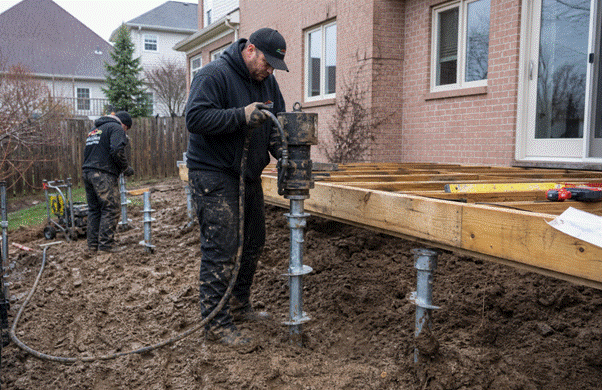
Helical piles, sometimes called screw piles, have become a popular fix for exactly this problem. These are steel shafts with helical plates that get twisted deep into the ground, well past the unstable clay layer, until they hit firmer soil. Because they don’t rely on curing time and disturb very little of the surrounding yard, they’re a solid choice for tricky Illinois lots.
Precast pier systems are another option worth knowing about. These reduce direct contact between the concrete and the reactive clay layer, which limits how much shrink-swell pressure actually reaches the structure. Some builders also use adjustable or vibro-driven pier systems that can be leveled after installation, which is handy if the yard settles unevenly over the first year or two.
Here’s a quick side-by-side to make sense of the options:
|
Foundation Type |
Approx. Cost |
Clay Resistance |
Typical Lifespan |
|
Poured concrete footings |
Lower upfront |
Moderate, needs proper drainage |
15 to 25 years |
|
Helical piles |
Moderate to higher |
High |
25+ years |
|
Precast piers |
Moderate |
Moderate to high |
20 to 30 years |
|
Adjustable/diamond piers |
Moderate |
High |
20 to 30 years |
There’s no universal winner here. It depends on your yard, your budget, and what a proper soil test tells you.
Frost Lines Make Everything More Complicated
Clay soil is already a handful on its own, but Illinois winters add another layer of difficulty. Local codes require footings to sit below the established frost line, which in the Naperville area generally falls somewhere between 36 and 42 inches, depending on the specific municipal code. Go shallower than that, and you’re inviting frost heave, which is when the ground freezes, expands, and physically pushes your footings upward.
When you combine a deep frost line with expansive clay, you get a foundation challenge that’s tougher than in states with milder winters. The freeze-thaw cycle doesn’t just add stress on top of the clay’s natural shrink-swell behavior, it amplifies it. Water trapped in clay near your footings freezes, expands, thaws, and repeats that cycle all winter long. That’s part of why so many older decks in the area start showing wobble or gaps after five or six winters.
Getting the Drainage and Site Prep Right
Good drainage is honestly half the battle. Grading your yard so water flows away from the deck’s footings, rather than pooling around them, makes a measurable difference in how long a foundation lasts. Builders often add gravel drainage layers directly under and around footings to help water move away from the clay instead of soaking into it.
Before any digging starts, a proper geotechnical soil test or a few soil borings can tell you exactly what you’re working with, including moisture content, clay plasticity, and bearing capacity at different depths. Skipping this step is one of the most common mistakes homeowners make when hiring the cheapest bid instead of the most thorough one.
If the yard has any fill dirt, meaning soil that was brought in and dumped rather than naturally settled, compaction becomes critical. Loose fill dirt combined with clay is a recipe for uneven settling within the first year or two.
How Local Builders Actually Evaluate the Ground
Good Naperville deck builders don’t just eyeball the yard and start digging. Most run a simple hands-on soil test first, literally squeezing a sample to see how it holds together, almost like checking play-doh consistency. For anything beyond a small ground-level platform, they’ll pull soil boring samples at multiple points across the footprint of the deck, since soil composition can shift dramatically over just a few feet.
For larger or more complex projects, some builders bring in a geotechnical engineer to design a custom foundation plan rather than relying on standard footing sizes. The results of these tests directly shape how many support posts are used and how deep each one needs to go. A yard with heavy, saturated clay might need more footings spaced closer together, while firmer ground might allow for a simpler layout.
Warning Signs Your Deck Is Already Fighting the Clay
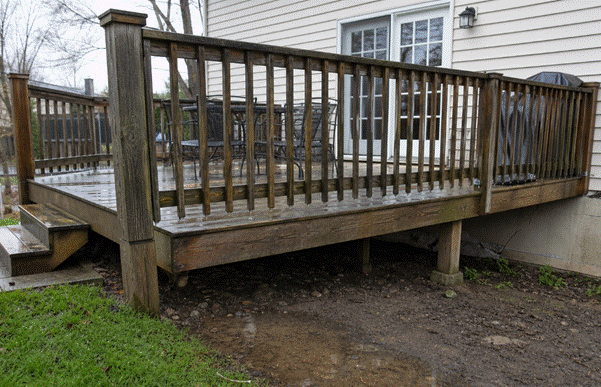
If your deck was built a few years ago without much thought to soil conditions, watch for these red flags:
-
Noticeable tilt or slope across the deck surface
-
Gaps opening up between the deck and the ledger board attached to the house
-
New squeaking or bouncing that wasn’t there before
-
One section settling lower than the rest
-
Cracks visible in exposed concrete footings
Any one of these on its own might not be urgent, but a combination usually means it’s time to have someone take a closer look at what’s happening below ground.
The bottom line is that clay soil isn’t something to work around after the fact. It’s something to plan for from day one. A deck built with the right foundation for Naperville’s soil conditions can easily outlast one that was thrown together without a second thought to what’s underneath, and it’ll save you a lot of headaches, and money, over the years.