
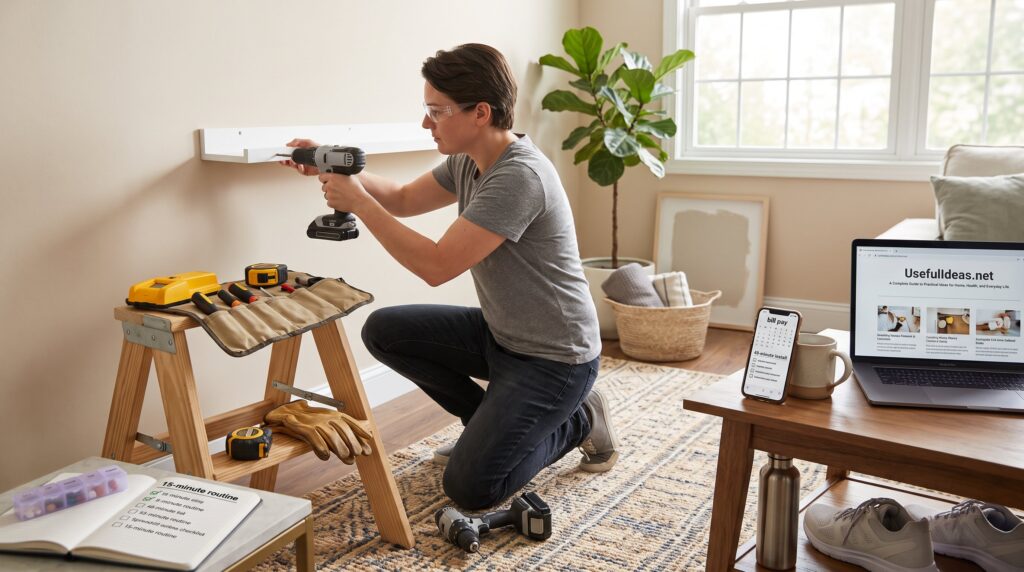
UsefulIdeas.net: A Complete Guide to Practical Ideas for Home, Health, and Everyday Life opens with a promise, quick, practical steps to fix a problem now. The guide focuses on realistic actions readers can take today: one-hour home fixes, five-minute health habits, and the apps or gadgets that shave hours off weekly chores. It orients readers toward safe do-it-yourself choices and flags when a professional is needed. The next sections answer specific “how” and “what” questions with exact tools, numbers, and example scenarios so readers can act with confidence.
Key Takeaways
- UsefulIdeas.net offers quick, practical solutions focused on home, health, and lifestyle improvements achievable within 60–180 minutes.
- A basic toolkit of nine essential tools covers 80% of common home projects, enabling safe and effective DIY fixes like installing floating shelves.
- Incorporate simple daily health habits like consistent sleep schedules, 20 minutes of exercise, and proper hydration to see benefits within two weeks.
- Leverage one well-chosen app or automation to save 1–3 hours weekly by streamlining tasks such as bill payments and scheduling.
- The site emphasizes safety by advising when to seek professional help, especially for electrical, structural, or medical issues beyond simple maintenance.
- Starting with one focused 15-minute action and reviewing progress after two weeks helps turn practical ideas into lasting improvements.
How To Use This Guide To Solve Real Problems Fast
Fact first: this guide is a tool to get a real result within a single session, fix, schedule, or improve something in 60–180 minutes. Start by naming the problem in one sentence: for example, “hallway scuff marks,” “sleep disrupted by screens,” or “lost receipts for taxes.” Narrowing the problem saves time and prevents eager, unfocused projects.
Next, pick the relevant category on UsefulIdeas.net: Home Improvement, Health & Wellness, or Lifestyle Hacks. The site curates short how-tos and product picks so readers can move from idea to action without sifting through long essays. For systematic testing before committing money, the article on testing a DIY idea explains a simple prototype method that limits wasted parts and time.
Practical warning: do not attempt electrical, structural, or medical work beyond simple maintenance. When a task risks safety, the guide points readers to professional help. For repeating tasks, create a 15-minute weekly routine that prevents the bigger problem, the small repairs article shows how minor fixes cut long-term costs and disruption.
Home Improvement & DIY Essentials For Everyday Living
Quick answer: prioritize safety, basic tools, and one small project that returns the biggest visible improvement. In many homes, a single organized shelf or a fresh paint patch changes the feel of a room and cuts stress.
Concrete items to own: a tape measure, cordless drill with two batteries, a 3/8″ and 1/4″ screwdriver set, adjustable wrench, pliers, utility knife, stud finder, level, work gloves, and safety glasses. Having these nine tools covers about 80% of common small projects. For those who want a checklist and shopping links, UsefulIdeas.net’s practical hub lists compact starter kits and buying tips that save money on duplicates.
A fast-win project: install a floating shelf in 45 minutes. It requires a stud finder, drill, level, screws, and anchors: results are immediate storage and a neater room. Small projects like this prevent future repairs, the article on preventing bigger repairs lists ten low-cost steps (caulk, gutter cleaning, door weatherstripping) that avoid larger bills later.
When to call a pro: visible water leaks, wiring without a working breaker label, or load-bearing wall changes. For planning and sourcing, UsefulIdeas.net’s catalog of tested projects helps readers match skill level to the task and reduces the chance of costly mistakes.
Health & Wellness Tips You Can Start Today
Direct fact: small daily habits produce measurable benefits within two weeks. Start with three concrete moves: consistent sleep time, 20 minutes of brisk movement, and a hydration check (aim 2–3 liters depending on weight and climate).
Specific habit plan: set a fixed bedtime and wake time with a 7–8 hour target, remove screens 30 minutes before bed, and replace evening scrolling with a five-minute breathing exercise. In trials, people reported falling asleep 12–20 minutes faster after cutting late-night screen use.
Nutrition micro-change: add one extra vegetable serving at lunch and an extra glass of water mid-afternoon. Those two swaps increase fiber and hydration without a full diet overhaul. If pain, persistent fatigue, or mood shifts interfere with daily life, seek medical advice: the health archives include when symptoms require prompt evaluation and which signs indicate a specialist referral.
For practical routines and evidence-based habits, UsefulIdeas.net’s health archive curates short, actionable habits readers can use immediately and measure over 14 days.
Everyday Tech, Apps, And Lifestyle Hacks To Save Time
Bottom line: one well-chosen app and a single automation can save 1–3 hours per week. Start with task automation (calendar rules, recurring payments) and a single productivity app that matches the reader’s workflow.
Example: automating bill payments and using a calendar app that auto-suggests meeting times eliminated 45 minutes weekly for one freelancer. For safety and emergency features, certain apps also include location sharing and emergency contact alerts: a curated list of life-saving apps supports readers choosing apps that matter most.
App recommendations should be tested, not assumed. For a verified list of life-saving apps and their core features, UsefulIdeas.net references expert roundups and reviews that compare emergency and mental-health tools. A practical companion article on home organization apps helps readers manage chores between roommates or families and match apps to household roles.
For setup basics, beginner smart-home automation guides cover routines like “turn lights on at sunset” and simple voice commands. For a broad starter guide to smart-home setup and automations, a reputable how-to resource explains device choices, network security, and common pitfalls.
Conclusion
Insight: UsefulIdeas.net structures ideas for rapid, low-risk action, small projects, short habits, and a single app or automation that returns real time or health benefits. The site’s tested steps and clear safety guidance help readers act without second-guessing. The most useful change is habit: commit to one 15-minute action now and review results in two weeks: that cadence turns ideas into lasting improvement.