
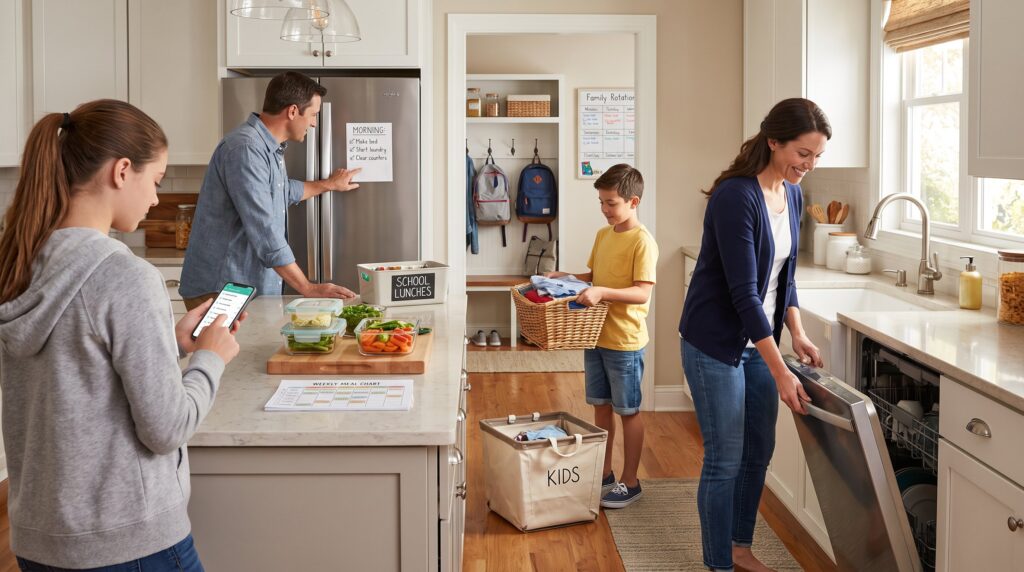
Practical ways to organize everyday household tasks start with short, repeatable systems that cut decision fatigue and missed chores. Busy households see immediate wins when they adopt tiny morning and evening rituals, a weekly task plan, and visible tracking. This article explains focused, testable techniques that save minutes every day and hours each week. It shows concrete routines, a sample rotation for laundry and meals, and hands-on tips for tools and delegation. Readers will get usable templates and warnings about common mistakes so they can put systems to work on day one.
Key Takeaways
- Organizing everyday household tasks with simple, repeatable routines reduces stress and saves 2–4 hours weekly by preventing rework and missed chores.
- Establish a 10-minute morning and evening routine focused on small, visible tasks to stabilize the day and avoid weekend catch-up.
- Implement a themed weekly task plan assigning specific chores to each day to prevent overload and build habitual cleaning patterns.
- Use straightforward templates for laundry, meal prep, and cleaning to maintain consistency and prevent backlog.
- Leverage visible tools like paper checklists or synced digital apps for easy tracking and quick updates of household responsibilities.
- Delegate age-appropriate tasks with scheduling and incentives, allowing family members to learn through experience and increasing compliance.
Why Organize Everyday Tasks? The Real Benefits For Busy Homes
The clearest fact: organizing tasks reduces daily stress and prevents repeated rework. When a household names responsibilities and slots them into short routines, fewer tasks fall through the cracks, and people waste less time searching for supplies or deciding what to do next.
Concrete benefits include measurable time savings, families report reclaiming 2–4 hours per week, and lower conflict over who does what. Organizing also increases home upkeep consistency: surfaces stay cleaner, laundry doesn’t pile up, and meal gaps decrease. A useful step is to pair a simple checklist with visible storage: labeled bins and hooks reduce the time spent looking for keys or school lunches.
PracticalIdeas readers often combine these systems with small home fixes. For design ideas that prevent repetitive work, consult the article on small home improvements to learn which changes cut future chores.
Build A 10-Minute Morning And Evening Routine
Answer first: a 10-minute morning and evening routine stabilizes the day and removes low-value decisions.
Morning routine (10 minutes): make beds (2 minutes), clear kitchen counters (3), start one laundry load (2), scan shared calendar for appointments (1), and pick top two priorities (2). Evening routine (10 minutes): reset common areas (3), load or unload the dishwasher (3), set out clothes and bags for tomorrow (2), and prep one meal ingredient or lunchbox (2). These tiny actions stack: doing them daily prevents 30–60 minutes of catch-up on weekends. Readers can pair this with the overview guide for a wider view.
Common mistake: trying to do too many items at once. One household tested a 20-step routine and abandoned it in a week. The successful pattern keeps tasks visible and under three minutes each. For simple habit nudges, the site’s piece on innovative solutions recommends low-tech triggers that stick.
Create A Simple Weekly Task System
Direct answer: assign a theme for each day and keep tasks bite-sized so they finish in 15–30 minutes.
A practical weekly plan: Monday, floors and entryways: Tuesday, laundry and linens: Wednesday, bathrooms and mirrors: Thursday, kitchen deep spots (fridge trim, counters): Friday, paperwork and bills: Saturday, yard and larger projects: Sunday, meal plan and reset. This rotation prevents one long, exhausting cleaning day and reduces procrastination. Each task stays small: rather than “clean kitchen,” the item reads “wipe counters, clear fridge door, sweep floor.”
A household that switched to themed days found that weekly tasks became automatic within three weeks. To combine storage and task flow, pair this system with the site’s article on kitchen storage solutions which shows how arranging tools near tasks cuts prep time.
Laundry, Meal Prep And Cleaning Rotation (Sample Templates)
Fact first: small, repeatable templates keep laundry moving, meals predictable, and cleaning achievable.
Laundry template: sort one load per day (5 minutes), run two loads on designated days (45 minutes machine time), fold immediately after drying (10–15 minutes), and put away within the hour. Meal prep template: plan meals once weekly (30 minutes), chop and store staples (40 minutes), pick two leftover nights. Cleaning rotation template: list daily (dishes, counters), weekly (vacuum, bathroom), monthly (oven, baseboards).
Example scenario: a family of four used this exact template and cut laundry backlog from 12 loads to a steady 3–4 loads a week, saving one full weekend afternoon every month. Warning: skipping the immediate-put-away step is the most common failure. Pair folding with a short timer and an audio cue to improve compliance.
Use Tools, Apps, And Checklists That Actually Help
Key point: the best tools are visible, simple, and update quickly.
Paper checklists on the fridge remain the fastest cue for most families. Digital options add value when they sync across devices: shared calendars for appointments, recurring reminders for trash day, and a simple shared checklist app for rotating chores. Favor apps that create recurring tasks and allow quick completion without deep menus.
One practical test: try a paper chart for two weeks, then move to a shared app only if paper fails. For readers exploring digital options, the site recommends a roundup of life hacks for home that includes approachable app suggestions and low-tech alternatives. Tip: labeled bins with a short printed checklist taped inside cut decluttering time by half in a small trial.
Delegate, Schedule, And Involve Family Members
Immediate fact: delegation works when tasks are age-appropriate, scheduled, and recognized.
Assign simple daily responsibilities: a child empties small trash cans, a teen handles dishwasher loading, an adult manages bill review. Use a rotating board: Week A, person 1 does floors: Week B, person 2 does bathrooms. Set a 15-minute daily family tidy time so tasks happen together. Incentives help: one family tracked completed chores and traded them for a monthly pizza or a small allowance: compliance rose 60% in two months.
A common vulnerability: parents often take back tasks because it’s faster. That undermines the system. Instead, coach the household member once, then let them fail and try again. For broader habit strategies that tie health and chores, consult the article on low-cost wellness habits, which recommends pairing short wellness wins with household responsibilities.
Conclusion
A practical household system begins with tiny routines, a themed weekly plan, simple templates for laundry and meals, visible tools, and shared responsibilities. Those elements reduce wasted time and household tension. Start with two-minute rituals, test a day-theme for three weeks, and keep tools simple and visible. For a deeper primer on combining these tactics with home and health ideas, the site links to a related resource on practical ideas.