
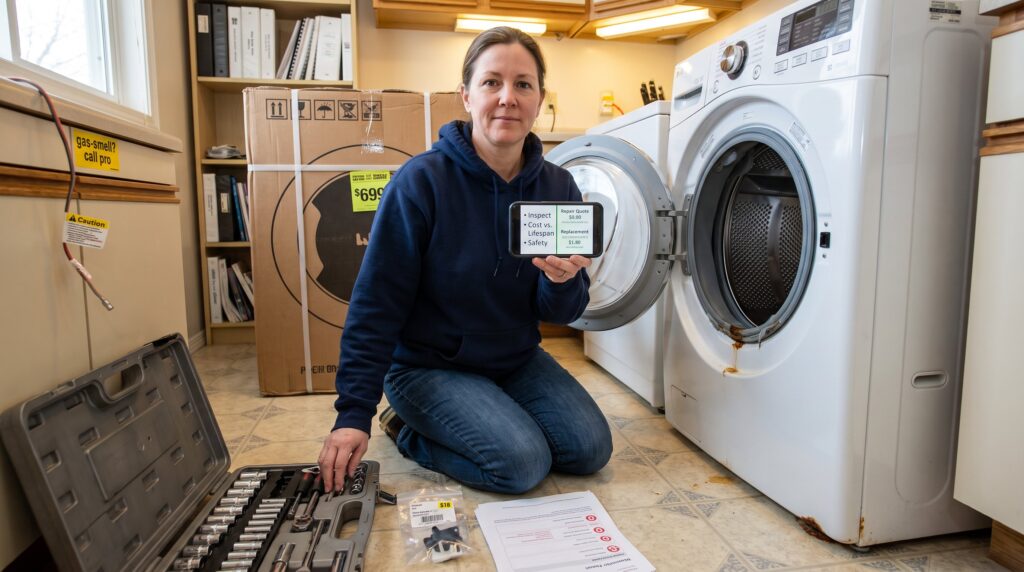
How to Decide Whether to Repair, Replace, or Hire a Professional is a short decision method readers can use the moment something breaks. It focuses on three clear factors: diagnose the failure, compare repair cost to replacement and remaining lifespan, and prioritize safety. The goal is to stop guessing, avoid repeated callouts, and cut unnecessary expenses, especially when a repair approaches half the price of a new unit. This guide gives an actionable 3-step framework, specific thresholds, and real red flags to help readers choose efficiently.
Key Takeaways
- Use a clear 3-step method: diagnose the issue, compare repair cost versus replacement and lifespan, and prioritize safety to decide effectively.
- If repair costs reach 50% or more of a new unit’s price and the appliance is over half its expected lifespan, replacing it is often more economical.
- Simple, low-risk repairs on appliances in their early lifespan can be safely done at home with proper tools and instructions.
- Always hire a professional when safety risks, complex systems, or gas and electrical components are involved to avoid hazards and extra costs.
- Repeated repairs on older equipment increase total expenses and stress, so timely replacement can save money and prevent emergency callouts.
- Prioritize safety by watching for warning signs like burning smells, gas leaks, or electrical issues and act promptly to replace or consult experts.
Why Making the Right Choice Saves Time, Money, and Stress
Choosing correctly at the first decision point prevents wasted hours and surprise bills. Fact: a repair that costs 50% or more of a comparable new unit often signals replacement is cheaper over the next few years. That 50% threshold reduces repeat breakdowns and emergency call‑outs, which typically add 20–40% in labor and rush fees.
When a homeowner replaces an appliance near its expected lifespan (for example, a refrigerator at 12 years), they avoid the domino effect of failing components. They also lower safety risk: burned wiring or gas leaks can quickly escalate to costly damage or injury. One homeowner’s story: after fixing the same washing machine three times in 18 months, they finally replaced it and saved four service calls and an estimated $420 in labor.
Practical benefit: using this method trims time spent researching and negotiating with technicians. For those who want a centralized resource on practical home choices, the site offers a broader primer on everyday fixes: see the short guide on practical ideas for context and follow‑up projects.
A Simple 3-Step Assessment Framework You Can Use Today
Step answer: Inspect, evaluate cost & lifespan, then decide. This three‑step framework forces clear checks instead of gut calls.
Step 1, Inspect, Diagnose, and Confirm the Problem
Inspect first: note sounds, leaks, smells, and error codes. Confirm the root cause rather than treating symptoms. For example, a noisy HVAC fan might be a loose blade (simple) or a failing motor (expensive). For mains electricity, gas, or sealed systems, get a written diagnosis from a qualified technician: a clear report prevents unnecessary parts swaps. A written diagnosis can also be used to compare quotes and identify unnecessary labor.
Step 2, Evaluate Cost, Remaining Lifespan, and Safety
Evaluate quickly: get a repair estimate and a replacement price. Compare them using the 50/50 rule: if repair cost ≥50% of replacement and item age >50% of expected lifespan, lean toward replacement. Use common lifespan benchmarks, washers 8–12 years, refrigerators 10–15 years, and prioritize safety flags: burning smells, gas odor, tripped breakers, or water on electrical components. If parts are discontinued or multiple components failed within 12 months, replacement is usually the sensible choice.
When It Makes Sense To Repair It Yourself: A Practical Checklist
Direct answer: Repair at home when the problem is simple, low cost, and low risk. Checklist below helps decide in under five minutes.
- Symptom is single, visible, and common (a worn seal, clogged filter, broken switch).
- Item is in first half of expected lifespan and has no recent repeat failures.
- Parts cost <20–30% of replacement and will add at least 2 years of life.
- No gas line, no mains wiring inside walls, and no structural permits required.
- Owner has basic tools, a clear procedure, and can safely isolate power or water.
Example scenario: a clothes dryer with a failed door switch on year 4, replacement switch costs $18, adds 5+ years, and requires no wiring changes. That fits DIY. By contrast, a sealed compressor on a 12‑year refrigerator rarely makes sense to open at home.
Readers who want a checklist for testing small fixes before committing time can pair this approach with a pretest routine: one useful walkthrough explains how to test a DIY idea before buying parts.
When To Replace The Item Or Hire A Professional: Red Flags And Rules Of Thumb
Quick insight: Replace or hire when safety, complexity, or cost make DIY impractical.
Red flags that require replacement or professional help:
- Repair quote ≥50% of the cost of a new unit while the unit is older or has repeat failures.
- Major component failure on older equipment (sealed refrigeration, main control board, or cracked motor housing).
- Parts are discontinued, or multiple critical parts have failed within a year.
- Any work involving gas lines, high‑voltage circuits, load‑bearing structures, or complex HVAC systems.
- Visible safety problems: melted insulation, heavy corrosion on electrical parts, gas smell, or significant leaks near electrical panels.
Rule of thumb: when in doubt about safety, hire a professional. A licensed pro not only fixes the fault but confirms no unseen hazards remain. For trades like roofing, where structural risk and permits matter, homeowners can read guidance on choosing between DIY and pros for roofing projects: see the article on hiring professional roofing help for decision cues.
Practical numbers: replacing an appliance once often costs 10–30% more than a midrange repair today, but frequent repairs cost 2–3x in service fees over two years. Hiring a pro upfront can reduce that churn.
Conclusion
Final takeaway: they should repair small, low‑risk issues on younger items: replace when repair cost and age cross the 50/50 threshold: and hire a professional for unclear diagnoses, safety risks, or complex systems. Use the three steps, diagnose, compare cost/lifespan, prioritize safety, to make faster, less costly decisions. For practical prevention tips that keep simple fixes from becoming emergencies, readers can explore small upgrades like gutter guards and seal replacements in the site’s pieces on small home improvements and organize routine maintenance with ideas from everyday household tasks.