
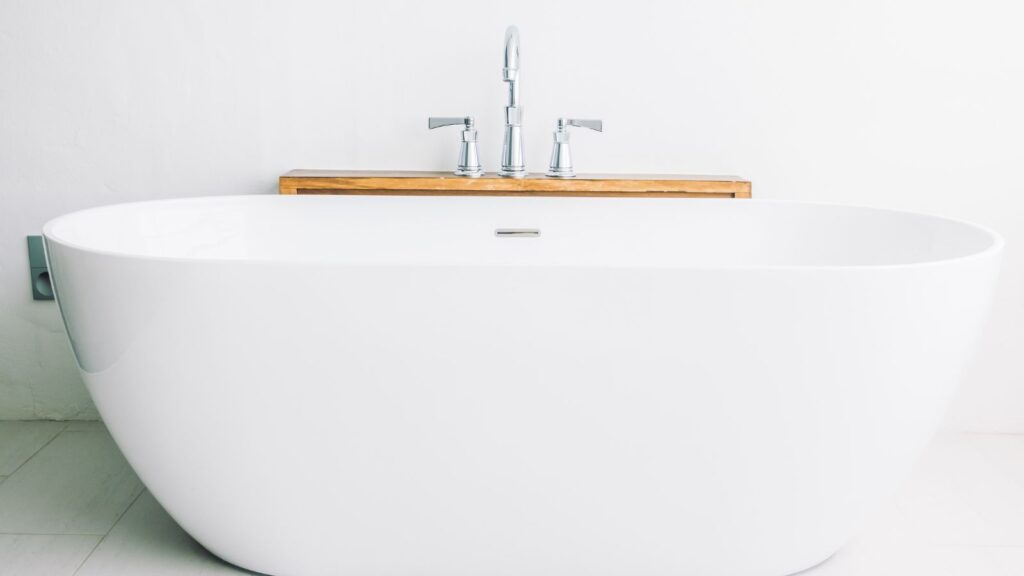
A bathtub can set the mood of an entire room, yet the best choice still has to work on an ordinary Tuesday morning. That is why selecting luxury bathtubs should begin with measurements, bathing habits, and installation realities rather than a dramatic product photograph. A broad collection of bathroom bathtubs makes it possible to compare freestanding, alcove, drop-in, and vintage-style options in one place, but the final decision belongs to the room and the people who use it.
Designers often start with a visual reference: a sculptural white tub, a dark matte finish, or a vintage silhouette with metallic feet. Homeowners tend to start somewhere more personal. One wants enough depth to soak after a long shift; another needs a rim that is easy to step over; a family may care more about simple cleaning and dependable everyday use. A successful bathroom reconciles those priorities instead of letting one beautiful feature dictate everything else.
Choosing Bathroom Bathtubs by Space, Fit, and Daily Use
Accurate planning is less glamorous than choosing a finish, but it prevents the expensive surprises. Measure the room, doorway, hall turns, and any stairs along the delivery path. Record the proposed tub’s length, width, height, and drain position. Then mark the footprint on the floor with painter’s tape. This quick exercise reveals whether cabinet doors still open, whether the toilet feels crowded, and whether someone can clean behind a freestanding model.
The bathing well matters as much as the exterior dimensions. Two bathroom bathtubs with similar overall lengths can feel very different because of the backrest angle, rim thickness, and interior floor length. A tall person may value usable legroom; a smaller bather may prefer support that prevents sliding. If specifications list soaking depth, compare it with the overflow position, because that is what limits the practical water level.
Weight deserves early attention. An acrylic tub is generally easier to move than a cast-iron or solid-surface model, while a heavy filled tub may require a contractor to confirm floor support. This is not a reason to avoid substantial materials. It is a reason to include the installer or remodeler before ordering rather than after the delivery truck arrives.
Modern Bathtubs Without the Short-Lived Trend Effect
The strongest modern bathtubs are not defined by novelty. They use clean proportions, controlled curves, and finishes that connect with the surrounding architecture. A minimal freestanding tub can look current for years when its shape relates to the vanity, tile grid, and hardware. The same tub can feel oddly detached if it is placed in a room with no repeated line, color, or material.
Think in layers. The tub supplies the main form. Tile and wall color create the background. Faucets, drains, lighting, and textiles provide smaller accents. Limiting the number of competing finishes usually gives an expensive bathroom more visual calm than adding another statement piece. Matte black can provide contrast, polished chrome reflects light, and warm metallic details can soften stone or white surfaces, but consistency matters more than choosing the finish currently featured in magazines.
Placement changes the experience too. A tub centered below a window may become the focal point, but privacy, glare, and access to the valve still need answers. A back-to-wall model can preserve the freestanding look while reducing the cleaning gap. An alcove tub may be the smarter modern solution in a compact plan because it uses the room efficiently and leaves space for storage or a larger shower.
Luxurious Bathtubs Are Built Around Comfort, Not Display
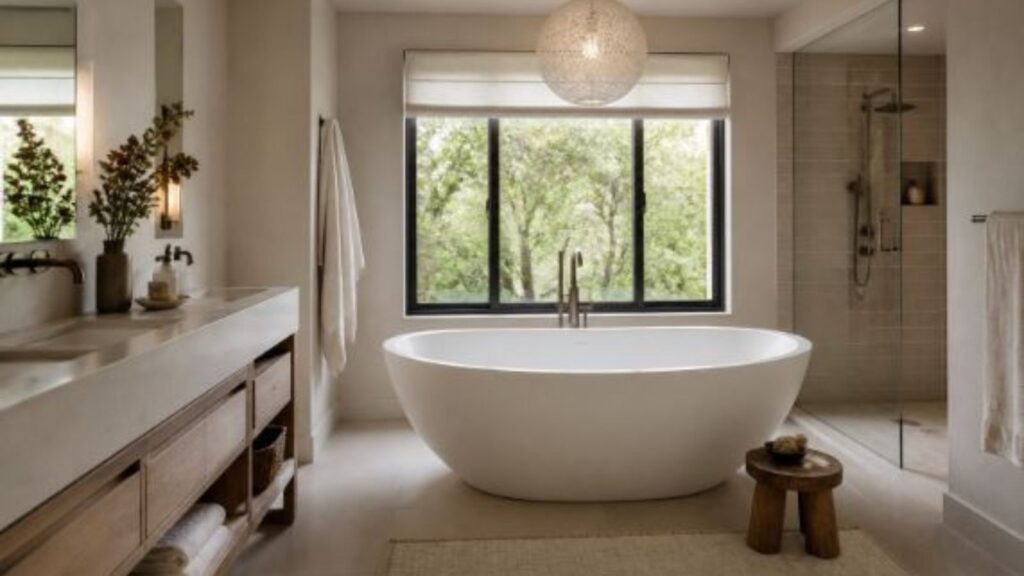
There is a useful difference between a costly object and a comfortable one. Luxurious bathtubs support the body, hold an appropriate water depth, and make controls easy to reach. Before buying, look at the slope of the backrest, the position of the drain, and whether the rim offers a safe place for a hand when entering or leaving. If two people may use the tub, a double-ended design with a centered drain avoids giving one bather the less comfortable end.
Material influences both feel and maintenance. Acrylic is widely chosen because it is relatively light and has an easy-care surface. Cast iron brings weight, solidity, and strong heat retention, though handling and structural planning are more demanding. Solid-surface and stone-resin designs can deliver smooth, substantial forms; their exact care requirements should be checked against the manufacturer’s instructions. No material is automatically best. The right one fits the budget, structure, cleaning routine, and intended style.
Faucet planning is part of comfort. A floor-mounted filler creates a clean freestanding composition but needs correctly located plumbing and secure installation. A deck-mounted faucet requires a tub designed to accept it. Wall-mounted controls can save floor space, provided the spout reaches the bathing well and service access is considered. Confirm these relationships on drawings, not by eye.
Designer Bathtubs and the Details That Make Them Work
With designer bathtubs, silhouette gets attention first, but the quieter details decide whether the room feels resolved. Check how the base meets the floor, how close the tub can sit to a wall, and where supply lines will be visible. Look at the relationship between tub length and wall width. Leaving intentional breathing room often looks better than squeezing the largest model into the available span.
A practical sample board helps. Place the proposed tub finish beside tile, grout, vanity color, metal finishes, and a fabric or paint sample. Review them in the actual room at morning and evening. Whites can have warm, cool, or gray undertones, and two products described as glossy white may not look identical together. Catching that difference early is easier than trying to disguise it after installation.
Delivery and warranty details belong in the buying decision as well. Inspect the package promptly, keep model and serial information, and make sure the installer follows the supplied instructions. Before work begins, agree on who is responsible for moving the tub, connecting the drain, testing for leaks, protecting the finish, and removing packaging. Those questions are mundane, which is precisely why they prevent friction.
A premium bathroom does not have to announce its price. It should feel considered when someone walks through it, easy when someone cleans it, and comfortable when someone finally uses the tub. Choose the dimensions and installation type first, test the material and finish against the room, and let the design grow from those decisions. The result will look luxurious because it works as one coherent space, not because every individual item tries to be the star.