
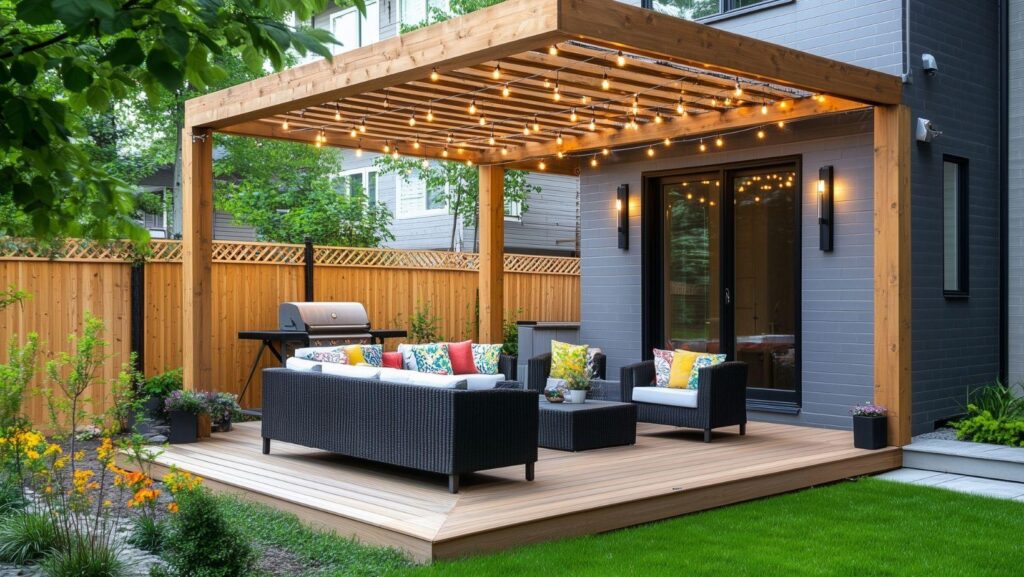
A smart outdoor deck renovation should improve how the house and yard function, not just how the deck looks. The best projects start with one question: what is not working right now? Maybe the current deck feels too small, the stairs land in the wrong spot, or the patio and yard feel disconnected. In some Seattle-area homes, the real issue is drainage, soft ground, aging wood, loose railings, or a failing deck frame.
Start With the Current Deck, Not the Dream Deck
Before choosing materials or expanding the layout, evaluate the existing deck. Some structures need a complete rebuild. Others can be improved in practical ways without starting from scratch, especially when the goal is to find the best solution for the house instead of forcing a bigger project.
Check the frame, the corners, the perimeter, and the railings. Look at the connection to the house, whether the door still lines up well with the layout, and whether the space supports the way people move through it. If the deck still feels visually attached to the house but functionally awkward, that usually points to a layout issue rather than a surface problem. A layout that looks perfect on paper is not always the one that works best in everyday life.
This is where the renovation should connect to the rest of the property, not feel like a separate object. It should help the outdoor living space feel complete.
When a Floating Deck or Ground Level Deck Makes Sense
Before choosing a layout, it helps to compare the most practical trade-offs side by side:
|
Option |
Typical build speed |
Typical cost range |
Best fit |
|
Floating deck |
Fast |
$1,500–$5,000 |
Flat or mildly sloped yards with stable soil |
|
Ground-level deck |
Fast to moderate |
$3,000–$12,000 |
Patios, garden edges, low transitions |
|
Elevated deck |
Moderate to longer |
$12,000–$40,000+ |
Sloped lots, walkout access, and larger outdoor living plans |
A floating deck can make sense when homeowners want more usable outdoor space without building something large and elevated. When planned correctly, a simple layout can often be completed faster than a more complex build. In some cases, it is also one of the more budget-friendly approaches, especially on smaller projects. In many cases, a ground-level deck works well near a patio, along a garden edge, or in the transition zone where the house gives way to the backyard. It can also be a smart idea when the location makes a taller structure feel unnecessary or out of scale.
Ground conditions matter more than people often expect. Floating decks also depend on mild site conditions, since deeper winter frost can shift the base over time. A floating deck is not casual just because it sits low. The base usually depends on deck blocks, paver base, gravel, pavers, and solid site prep that keep everything stable. Even if the deck rises only a few inches above grade, the support system still matters.
Problems start when people assume floating means simple. It is not. A block layout has to match the load, the dimensions, and the site conditions. In wet parts of Seattle, soft soil, slope, and drainage can change the whole answer.
The Ground Work Matters More Than People Expect in the Seattle Area
Good deck work starts before anything visible is built. That may mean clearing grass, checking the ground, and digging out uneven areas. It can also mean adding gravel, compacting paver base, laying landscape fabric, and setting pavers or concrete support points at the right height. In some cases, crews also need to fill low spots before the layout can be trusted.
Grade changes, retaining walls, or awkward corners affect the entire project. Even a small block base needs a level surface and solid support. If the base shifts, the whole frame can shift with it.
In colder regions, the frost line can also affect whether a floating approach is the right one. Not every project needs deep footings, but the site still requires careful judgment. This is where an experienced deck renovation team can often spot issues early and keep a great project from becoming a frustrating one later.
Build the Deck Frame Around Daily Use
The best deck frame supports how the space will be used. For elevated builds, that frame relies on structural posts that carry the load and lift the platform above grade. Start with the basics. Is there room for a table, a grill, or built-in benches? Do the stairs land where they should? Do the edges need railings for safety? Will the deck feel open or boxed in? A good deck company should raise these questions before recommending major changes. Contractors should also be ready to show recent local work, explain whether crews are in-house or subcontracted, and provide references that help homeowners judge build quality with more confidence.
This is also the time to choose between cedar, composite, or full composite decking. Hardwood options are sometimes considered for their strength and durability, especially in areas exposed to harsher weather. Composite decking is typically made from a mix of wood fiber and plastic, which is one reason it performs well in wet conditions. Wood brings warmth and character. In the Northwest, Western Red Cedar remains popular because it handles rot and insects well, though it still needs regular sealing and staining. Composite and PVC options reduce upkeep and are often chosen for their resistance to mold, rot, and warping. The right choice depends on budget, exposure, and the level of maintenance the household wants to take on.
Hardware matters. A solid frame depends on the right connectors, including joist hangers, proper fasteners, and edge support that keeps the structure feeling tight over time.
Think Beyond the Deck Surface in the Outdoor Living Space
A renovation works best when the deck connects to its surroundings. That may mean pergolas, better patio access, a cleaner tie-in to a nearby fence, or room for seating and planting beds within the outdoor living space. In the right service plan, those details help make the renovation useful day to day.
These details separate a basic build from a well-planned one. Usability usually matters more than square footage, and in Seattle, slip resistance matters because frequent rain can change how safe a deck feels. Sometimes the smartest move is not a larger deck but a better layout.
Why Local Experience Still Matters: Seattle Deck Contractors
Deck work in Seattle is not just about appearance. Moisture, slope, drainage, permits, and material performance all matter. Site conditions vary across Seattle, so broad advice rarely fits every project. A reliable renovation service should account for those differences early, not after materials are ordered. That includes understanding when permits are required, how local review can affect the timeline, and how Seattle’s stricter permitting environment can shape planning. Contractors working in this area are typically familiar with local jurisdictions across Seattle, Bellevue, and the surrounding King County region. Compared to other parts of Washington, Seattle often requires more detailed review and coordination before construction can begin.
That is one reason many homeowners look into Seattle deck contractors when the job moves past cosmetic changes. Local contractors usually understand how to build for wet weather, how to handle site prep, and how to plan deck structures that last. Many specialize specifically in deck construction rather than general remodeling, which often shows in the level of detail and finish quality. They should also be able to provide detailed estimates that break down materials, labor, permits, and cleanup, along with proof of Washington licensing and current liability and workers’ compensation coverage.
People love Seattle for the trees, the views, and the way outdoor time becomes part of daily life. A well-planned deck should support that. Good renovation work is not about chasing the biggest dream. It is about building a space that fits the house and the way people actually live. The best crews usually love building spaces that feel practical first and impressive second. When the structure is built well and matched to the right materials, that kind of deck can last for decades, often longer than homeowners expect.