
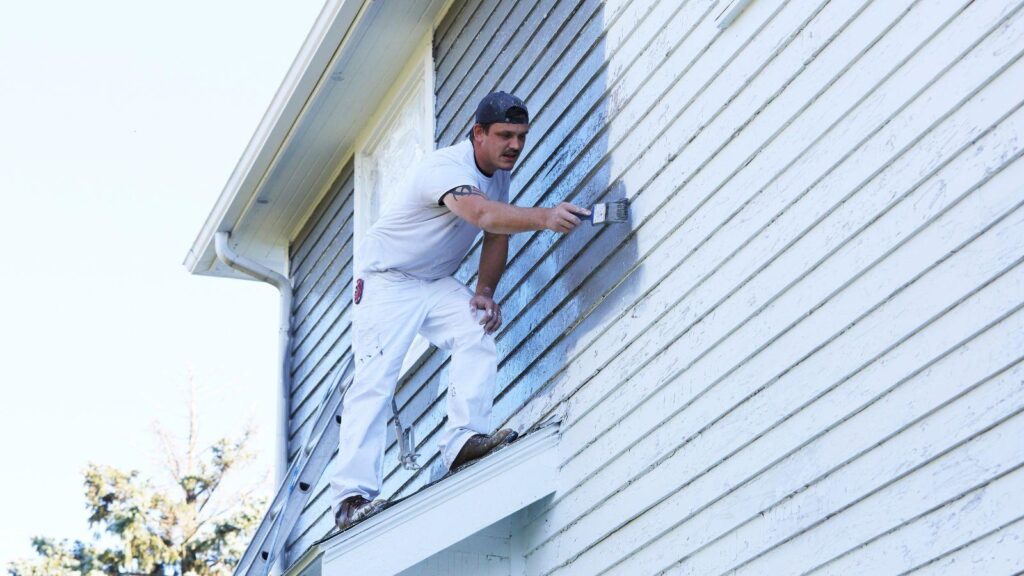
Exterior paint does more than affect curb appeal; it forms a protective barrier against moisture, sun exposure, and general wear that can otherwise damage the siding underneath. In a climate as wet as Seattle’s, that protective function matters even more than in drier regions, since exposed or compromised siding can absorb moisture and lead to more serious structural issues over time.
- Visible cracking, peeling, or bubbling paint on any part of the exterior
- Fading that’s noticeably uneven between sun-exposed and shaded areas of the home
- Chalky residue that rubs off on your hand when you touch the siding
- Small cracks or gaps around window and door trim
- Visible wood grain showing through where paint has worn thin
- Mold, mildew, or algae growth that persists even after cleaning
- Rust stains bleeding through paint near metal fixtures or fasteners
Cracking and peeling are usually the most obvious signs, and they typically indicate that the paint’s protective seal has already been compromised in that area. Once paint starts to peel, moisture can get underneath the remaining coating and accelerate damage to the siding itself, which is why addressing peeling paint sooner rather than later tends to prevent more expensive repairs down the line.
Chalking, the powdery residue that appears on some exterior paints as they age, is a sign that the paint’s binders are breaking down from prolonged UV exposure. While a small amount of chalking is normal as paint ages, a heavy chalky residue that transfers easily to your hand or clothing usually means the paint is well past its effective lifespan.
Uneven fading is another sign worth watching for, particularly on homes with significant sun exposure on one side. If one wall looks noticeably different in color from a wall that gets less direct sunlight, this typically indicates UV degradation that will only become more pronounced over time, and it’s often more noticeable in person than in photos, especially in bright daylight.
Persistent mold, mildew, or algae growth is especially relevant in a climate like Seattle’s. While some surface growth can often be cleaned, if it returns quickly or seems to be growing from beneath the paint rather than just on the surface, this can indicate that moisture has already gotten past the paint layer and into the siding material itself, which is a more serious issue than surface-level growth alone.
Small cracks around window and door trim deserve particular attention, since these areas are common entry points for water even when the rest of the home’s paint looks fine. A qualified exterior painter will typically inspect these transition points closely during an estimate, since problems here can lead to water damage well before the broader exterior paint shows obvious signs of wear.
Generally speaking, exterior paint in the Seattle area tends to need refreshing every seven to ten years, though this varies significantly based on the quality of the original paint job, the home’s sun and moisture exposure, and the specific siding material. Catching these warning signs early, rather than waiting until damage extends beyond the paint into the siding itself, is the most cost-effective approach to exterior home maintenance in a climate this consistently damp.
A simple annual walk-around, ideally in late summer before the wet season sets in, is often enough to catch most of these warning signs before they progress. Taking a few photos each year of the same sections of the home makes it easier to notice gradual changes in color or condition that might otherwise be too subtle to spot from memory alone.
Addressing even one or two of these warning signs promptly, rather than waiting for the whole exterior to look worn, tends to extend the life of the existing paint job and delay the cost of a full repaint by a meaningful stretch of time.