
Finding a wasp nest on your property is one of those home discoveries that people tend to either ignore too long or panic about too fast. Neither approach helps. Wasps are predictable creatures with predictable behaviour, and once you understand what you’re actually dealing with, you can make a calm, informed decision about what to do next.
This guide walks you through what the nest means, what the risks actually are, when to act, and what your options look like.
First: Don’t Do Anything Yet
This sounds counterintuitive, but the single most important thing you can do when you spot a wasp nest is pause. Wasps are defensive, not aggressive by nature. A nest left completely alone is a nest that poses very little risk. The danger escalates when nests are disturbed, accidentally or otherwise.
Before you act, ask yourself a few things:
A nest tucked under a rarely-used deck or high in a tree at the edge of your yard is a very different situation from one inside a wall cavity next to your back door. Location matters enormously. So does timing.
Understanding the Nest
Wasp nests are built fresh every year. Queens overwinter alone and start a new colony in spring. By late summer, a single nest can house thousands of workers, and the colony reaches peak aggression in late August and September when food sources become scarcer and the workers protecting the queen become more defensive.
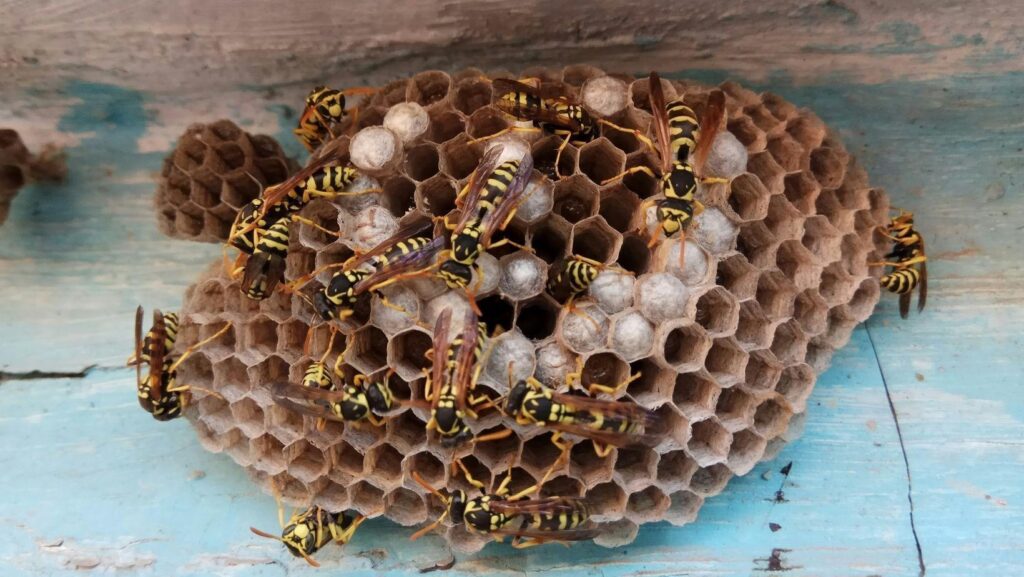
What you’re looking at is a paper-like structure made from chewed wood fibres mixed with wasp saliva. You’ll find them in sheltered spots: wall cavities, roof eaves, garden sheds, under decking, in the ground (ground wasps are common and often overlooked), and occasionally in loft spaces.
Knowing the type of wasp matters too. Common wasps and German wasps are the ones most people encounter in UK and Canadian suburban settings. Hornets are larger and louder but are generally less aggressive than their reputation suggests when unprovoked.
The Real Risk Assessment
Here’s the honest truth: most wasp nests don’t actually sting anyone. People live alongside them all summer without incident. But there are scenarios where the risk profile changes:
High-risk situations include:
Lower-risk situations include:
If you fall into the lower-risk category and we’re past September, you may not need to do anything at all. The colony will die off naturally as temperatures drop, and the nest will not be reused next year.
When to Call a Professional
Some people feel confident handling a small, accessible nest with shop-bought insecticidal dust. That can work in specific circumstances. But there are situations where attempting DIY removal creates far more risk than calling someone who knows what they’re doing.
Get a professional involved if:
For homeowners in and around Brampton, professional wasp nest removal from a licensed pest control technician is often the safest and most effective route, particularly for nests in enclosed spaces where airflow and safe product application matter.
Professionals have access to stronger insecticidal products, appropriate protective gear, and the experience to treat nests in difficult locations without escalating the situation. The process is usually faster than most people expect.
What to Expect From a Treatment Visit
Whether you go professional or DIY, it helps to know what a successful treatment actually looks like.
The treatment itself typically involves applying insecticidal dust or spray directly into the nest entrance. The goal isn’t to spray individual wasps; it’s to get the product into the nest where workers carry it back through the colony. This is why direct application to the entrance works better than surface spraying around the area.
Activity doesn’t stop immediately. After treatment, you’ll often see increased wasp activity for a period of hours as workers return to the nest and encounter the product. This is normal and expected. Don’t assume the treatment failed because wasps are still flying around.
Give it 24 to 48 hours. By that point, a successful treatment will have knocked out the colony. Remaining wasps won’t have a viable nest to return to.
The nest itself doesn’t need to be physically removed in most cases. Once the colony is dead, the structure poses no ongoing risk and will degrade over time. If it’s in an awkward location or you simply want it gone, that’s a separate step from the treatment.
Preventing Nests Next Year
One nest on your property doesn’t mean you’ll get another, but wasps do favour the same kinds of spots year after year. The same sheltered, dry cavities that worked well for one queen will appeal to the next.
A few practical steps:
You won’t fully wasp-proof a garden. They’re wildlife and they’re useful, keeping aphid and caterpillar populations down throughout the summer. The goal isn’t elimination of wasps from your property but finding a practical balance where they’re not nesting in spaces that create real safety risks.
The Bottom Line
Finding a wasp nest doesn’t automatically mean you have an emergency on your hands. Most nests, in most locations, can be monitored, managed, or simply left alone until the season ends naturally. The ones that need action are the ones in high-traffic areas, inside your home’s structure, or large enough that accidental disturbance is a real possibility.
When you do need to treat, the method matters less than making sure it’s done safely. Whether that means a careful DIY application or calling a professional depends on location, nest size, and your own comfort level.
Act calmly, assess realistically, and you’ll have this sorted with a lot less stress than you probably imagined when you first spotted those wasps going in and out of the wall.